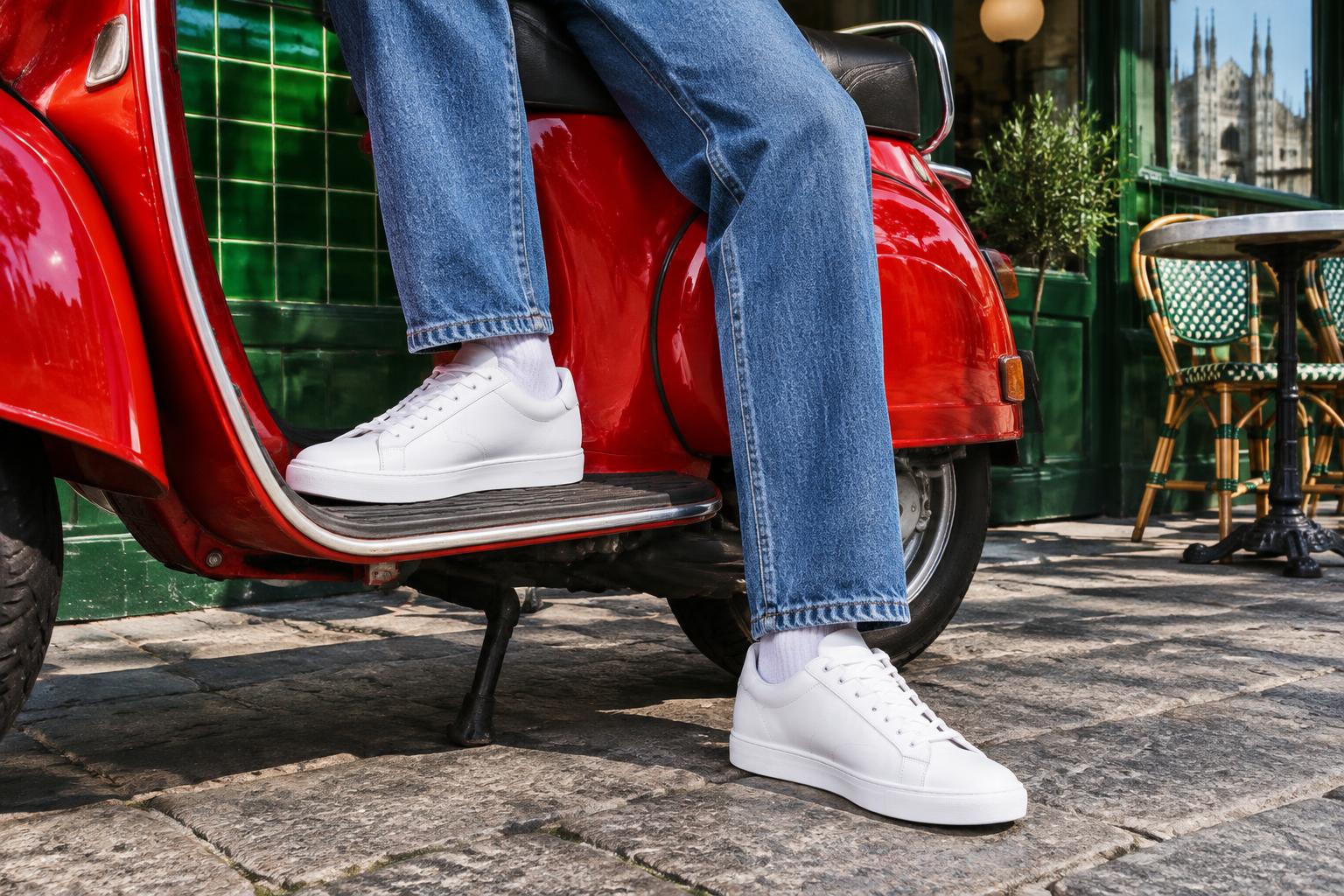
London Fashion Week street style is the most individual of the four Fashion Month cities. Where New York tends toward polished practicality, Milan toward sleek tailoring and Paris toward effortless elegance, London rewards personality. Vintage rubs shoulders with sportswear, a heritage overcoat meets a clashing scarf, and nobody seems worried about matching.
This guide breaks down the looks, silhouettes and styling habits that define London Fashion Week street style, with practical outfit formulas and advice on adapting the spirit to your own wardrobe. You will also find a section on dressing for London's weather, which shapes almost everything outside the venues.
For the event itself, including how the week works, see our overview of London Fashion Week 2026. Here, we are firmly on the pavement.
What makes London street style different
Three ingredients set London apart.
- Individuality over uniformity. People dress to express a point of view, not to follow a house style. Expect unusual combinations, strong prints and personal touches.
- Mixing eras and price points. Vintage finds, secondhand coats and high-street basics sit alongside designer pieces. The skill is in the mix.
- Weather as a design brief. London weather can change several times in one day, so layers, coats and sturdy shoes are part of the look.
The city's strong art school culture and its tradition of subcultures, from punk to mod, also leave a mark. You can see it in the willingness to experiment with hair, makeup, tailoring and accessories.
Key looks and silhouettes
We describe directions rather than specific collections, because street style reflects how people interpret trends, not what any one designer showed.
The reimagined trench and raincoat
Outerwear is where London shines. Trench coats and raincoats appear in classic tones, but also in unexpected colors, with oversized proportions or worn belted loosely. A well-chosen coat can be the entire outfit.
Tailoring with attitude
Blazers, waistcoats and pants are everywhere, often styled in unconventional ways: a blazer over a slip dress, a waistcoat over a bare-looking base layer of fine knit, pants with a deliberately mismatched jacket. The result is smart but not stiff.
Knitwear and texture
Chunky knits, cardigans, scarves and layered textures suit both the climate and the aesthetic. Look for cable knits worn over shirts, long cardigans over dresses and scarves wrapped in an offhand way.
Mixed prints and checks
Check patterns, stripes and florals appear together more often than elsewhere. The trick is a shared color or a clear dominant pattern so the combination reads as deliberate.
Skirts over pants and unexpected layers
Layering a skirt over pants, a dress over a shirt or a sleeveless piece over a knit is a recurring London move. It adds depth and keeps the look interesting without new purchases.
Boots and sturdy footwear
Chunky boots, loafers, Mary Janes, trainers (called sneakers in the US) and practical flats dominate. Many outfits use footwear to add a note of edge or whimsy.
Eight outfit formulas to try
- The tailored contrast. Wide-leg pants, a fitted knit, an oversized blazer and chunky loafers.
- The rain-ready layer. A belted trench, a scarf, straight jeans and sturdy boots.
- The vintage mix. A secondhand wool coat, a modern slip skirt, a fine knit and ankle boots.
- The pattern play. A checked jacket, a striped shirt in a related color and plain pants.
- The sporty tailor. Track-style bottoms or a sporty jacket with a sharp shirt and polished shoes.
- The dress with a twist. A midi dress with a boxy jacket, tights and boots.
- The knit stack. A turtleneck, a cardigan, a scarf and a long skirt, in tones that sit close together.
- The statement accessory. A neutral outfit lifted by a bold bag, colorful tights or oversized sunglasses.
Dressing for London's weather
If you attend, or if you simply want to understand why the looks work, weather is the key.
February season
Expect cold, damp days. Layer with a warm coat, scarf and gloves, and choose boots that handle wet pavements. Wool tights or lined pants keep legs warm under skirts and dresses. Carry a compact umbrella, or choose a coat with a hood.
September season
Early autumn can bring mild sun, sudden rain and cool evenings in the same day. Lightweight layers work best: a trench, a cardigan, a shirt and a scarf you can remove or add. Choose shoes with grip.
Fabric choices
Wool, cotton, denim and waxed or coated fabrics all earn their place. Delicate materials tend to appear under a coat, not exposed to the weather.
Accessories that carry London looks
- Scarves: A practical piece that doubles as color and pattern.
- Hats: Berets, caps, bucket hats and woolly beanies appear throughout the week.
- Bags: Structured shoulder bags, roomy totes and crossbody styles. Many are chosen for practicality.
- Tights and socks: Colorful or textured options bring personality, whether under a skirt or with loafers.
- Jewelry: Chunky rings, bold earrings and layered chains, usually in a deliberate quantity.
- Eyewear: Sunglasses are worn even on gray days, as a style choice.
How London compares with the other Fashion Month cities
It helps to see London in context.
| City | Overall mood | Typical street style cues |
|---|---|---|
| London | Individual, eclectic | Mixed prints, vintage, tailoring with edge |
| Paris | Elegant, effortless | Tailored basics, trench coats, refined accessories |
| Milan | Sleek, polished | Sharp tailoring, leather, considered color |
For a closer comparison, read our guides to Paris Fashion Week street style and Milan Fashion Week street style. For the broader event, see Paris Fashion Week 2026 to understand how the circuit closes.
How to wear the London look at home
You do not need a London wardrobe to borrow the approach.
- Start with a coat. A good trench or wool coat is the most reliable shortcut.
- Add one unexpected piece. A patterned scarf, a vintage jacket or colorful tights adds the personal note.
- Mix price points. Pair a secondhand find with a basic from your regular store.
- Layer on purpose. Choose pieces that look interesting in combination, and keep colors related.
- Choose shoes you can walk in. Practical footwear is part of the aesthetic.
- Let proportions play. Try a long coat with short pants, or a short jacket with a long skirt.
Common mistakes
- Overcomplicating. Mixing too many ideas at once looks messy. Keep one hero element.
- Ignoring fit. Even eclectic outfits depend on well-fitted pieces.
- Forgetting the weather. A beautiful outfit that leaves you cold will not last the day.
- Copying exactly. Street style works best as inspiration. Adapt it.
Street style by occasion
London guests move between very different settings in a single day, which is why the looks adapt so easily.
- Morning shows: Tailoring and knitwear, with a coat you can remove indoors. Shoes should handle a long walk.
- Afternoon events: Add a more polished layer, such as a structured jacket or a standout bag. Swap sneakers for loafers or boots.
- Evening parties: Introduce shine, a slip dress or sharper tailoring, kept grounded by sturdy shoes and an outer layer.
- Travel days: Soft knits, stretch-friendly pants and a coat with generous pockets. Pack the statement piece separately.
Fit and proportion notes
London street style plays with scale, but it follows rules.
- Oversized on top, slim below, or the reverse. A big coat works with narrower pants; a fitted knit works with a wide skirt.
- Mind the hem. Pants should skim the shoe, and coats should either clear or deliberately cover the knee.
- Balance volume. If you wear several layers, keep at least one of them close to the body.
- Use belts. A belt over a coat or cardigan restores shape without removing warmth.
- Pay attention to sleeves. Slightly long sleeves on knitwear and jackets look intentional when the rest of the outfit is neat.
What to buy, and what to borrow from your own wardrobe
Street style is easier to copy than it looks, because most of it is already in your closet.
- Look in your closet first. Combine pieces you do not usually wear together, such as a skirt over pants or a check jacket with striped knitwear.
- Spend on outerwear. A coat is the foundation of the London look and lasts for years.
- Shop secondhand for character. Vintage blazers, knitwear and coats bring texture you rarely find in new basics.
- Save on accessories. Scarves, hats and tights are inexpensive ways to refresh outfits.
Where to see the looks
Editorial galleries, photographers' feeds and magazine round-ups document the pavements every season. Look at repeated details, such as a color, a coat shape or a shoe style, rather than single standout outfits. Our London hub gathers all our coverage in one place.
Frequently asked questions
What is London Fashion Week street style known for?
It is known for individuality, mixed prints, vintage pieces and tailoring with an unexpected twist. Outerwear and layering play a big role because of the climate.
How do I dress like a London Fashion Week guest?
Start with a strong coat, add a mix of textures and keep one standout element, such as a scarf, boots or a bag. Choose shoes you can walk in and layers you can adjust.
Is London street style practical?
Often, yes. The weather shapes the outfits, so you will see coats, boots, scarves and layers more than delicate, weather-sensitive pieces.
Can I recreate the look on a budget?
Yes. Mix secondhand and high-street pieces, invest in one good coat and use accessories to add personality.
The takeaway
London Fashion Week street style proves that personality beats perfection. Choose a coat you love, mix textures with confidence and let one detail do the talking. The rest follows.