The best petite dresses are not simply smaller versions of standard sizes. They are cut for a shorter frame, with the waist, hem and sleeves placed where they should be, so the dress sits as it was designed to. If you are around 5ft 4in (162cm) or under, that difference is often the gap between a dress that looks right and one that always needs altering.
This is a buyer's guide for UK shoppers. It explains what petite sizing really means, which proportions and details flatter a shorter frame, how to choose by style and occasion, and which fixes a tailor can make. No product rankings, just criteria you can apply at any price.
Quick picks: the best petite dresses by need
| If you want... | Look for... | Why it works |
|---|---|---|
| A dependable everyday dress | Knee-length or just-below-knee shirt or wrap dress | Balanced proportions, easy to style |
| A summer option | Short-sleeved midi with a defined waist, in a light print | Cool, easy and not overwhelming |
| Something for work | Tailored sheath or A-line in crepe or ponte | Polished lines and structure |
| A special occasion dress | Fit-and-flare or slip midi at mid-calf | Elegant without drowning the frame |
| A long dress | Ankle-length maxi with a high waist | Elongates the line, avoids pooling |
| A winter option | Knitted or long-sleeved dress at the knee | Warm, clean silhouette, works with boots |
What petite sizing means
Petite ranges are designed for shorter heights, typically with shorter body lengths, higher waist and bust points, shorter sleeves, and shorter hems. They are not always smaller in width, so a petite size 16 is still a size 16 across the chest and hips; it simply has less length.
Each retailer sets its own height guidance, so always check the size guide. If a brand gives a stated model height, compare it with your own. If you are slightly above the petite cut-off but find standard dresses too long, try a petite range first and see how the proportions feel.
What to look for in a petite dress
Waist and bust placement
The most important detail is where the waist seam falls. On a dress cut for a taller person, it lands too low, which shortens the leg line and makes the torso look elongated. A petite-cut dress places it higher. If you buy standard sizes, check that the waist seam meets your natural waist, or choose styles with an adjustable tie or elastic.
Hem length
Hem length changes proportions dramatically. For many petite shoppers, the most flattering lengths are just above the knee, at the knee, or a midi that ends at mid-calf or a little below. A hem that stops at the widest part of the calf can cut the leg line, and a very long skirt can swallow the frame. As a rule, a hem ending at a narrower point of the leg looks longer.
Sleeves and armholes
Sleeves that are too long swamp the hand and shorten the arm line. Look for three-quarter, bracelet-length or short sleeves that end close to the wrist or above the elbow. Armholes should sit close to the body without gaping.
Scale of print and detail
Large prints, oversized bows and wide ruffles can overwhelm a smaller frame. Smaller or mid-scale prints, narrower trims and neat details tend to sit in proportion. This is a guideline, not a rule, and a bold print worn with confidence can still look excellent.
Fabric weight
Heavy, stiff fabrics add bulk and can make a shorter frame look boxy. Lighter fabrics with some drape, such as crepe, jersey, viscose and fine knits, follow the body more naturally. Structured fabrics work well when the cut is clean and the dress fits closely.
Best options by style
The wrap dress
A wrap defines the waist at the right place on your body, because you tie it where you want it. It adapts to different proportions and creates a vertical line along the V-neckline.
Best for: everyday wear, work and occasion dressing. Consider: check the wrap length, and look for a version that fastens inside as well as outside for security.
The shirt dress
A belted shirt dress is a classic with a clear structure. The vertical line of buttons elongates the frame, and the belt lets you set the waistline.
Best for: smart-casual days and travel. Consider: the hem should end at or near the knee. A longer version works if the belt sits high.
The fit-and-flare dress
A fitted bodice and a skirt that flares from the waist is an easy shape to wear. It defines the waist and balances the hips, and it works at most lengths.
Best for: occasions, parties and daytime events. Consider: keep the skirt volume moderate, so the shape does not overwhelm a smaller frame.
The slip dress
A slip dress in satin or crepe falls cleanly along the body. In a mid-calf or knee length, it is a graceful option for evenings.
Best for: dinners and parties. Consider: adjustable straps are essential, because the fit depends on the neckline sitting in the right place.
The midi dress
Midis can be tricky for shorter frames, but they work when the proportions are right. A high waist, a vertical detail and a hem that falls just below the knee or at the narrow part of the calf keep the line long. Shoes with a slight heel or a pointed toe extend the leg further.
Best for: most occasions, with careful attention to length. Consider: if the hem is too long, a tailor can shorten it. Alter it before you decide the style does not work for you.
The maxi dress
A well-chosen maxi can work beautifully on a petite frame. Look for a high waist, a column of fabric without heavy tiers, and a hem that just skims the floor in your shoes. For more detail on this style, see our guide to the best maxi dresses.
Best for: summer, holidays and evenings. Consider: full, multi-tiered skirts can overpower. A slimmer or A-line shape stays in proportion.
The knit dress
A fine-knit dress in a fitted shape is an easy winter option. It looks tidy under a coat, and pairs well with ankle boots or knee-high boots.
Best for: cold weather and everyday wear. Consider: avoid heavy, chunky knits, which can swamp a shorter frame.
Choosing by occasion
Work
Tailored sheaths, wrap dresses and shirt dresses in structured fabrics suit most offices. Choose a hem at the knee or just below, and a sleeve length that sits neatly at the wrist. A blazer cut for a petite frame completes the look.
Weddings and formal events
For guests, a midi or knee-length dress with a defined waist is the most reliable choice. Our guide to the best wedding guest dresses outlines how to match dress codes, colours and venues.
Summer days and holidays
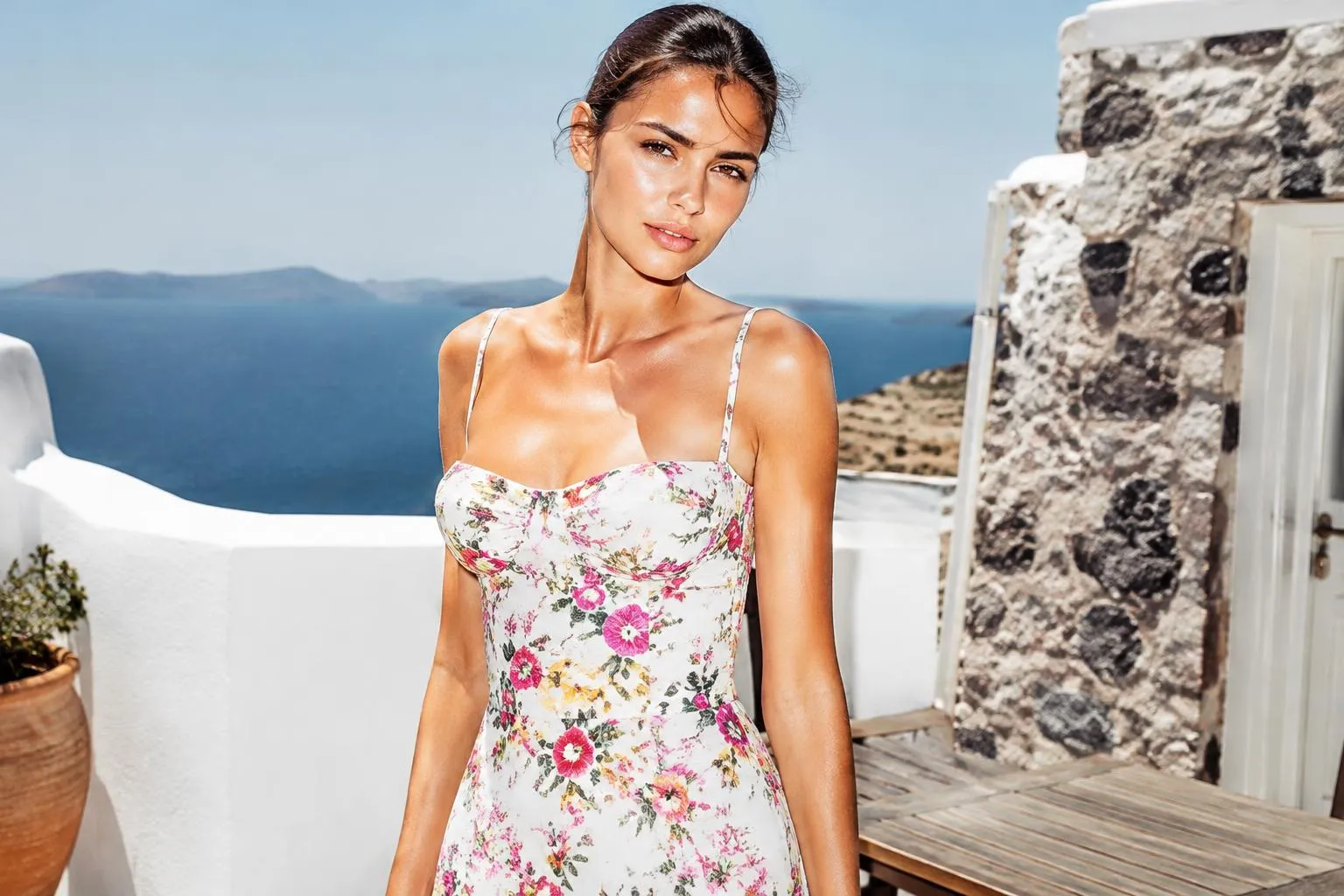
Choose lightweight, breathable fabrics in a shorter midi or a knee-length cut. Wrap, tea and shirt styles keep the proportions balanced. For wider ideas, our edit of the best summer dresses covers the season in more depth.
Evenings and parties
A slip midi, a fitted knee-length dress or a short fit-and-flare all work well. Add a heel, a pointed flat or a sleek boot to extend the leg line.
Simple tailoring that makes a difference
Many petite shoppers find a tailor transforms an off-the-peg dress. These are the most useful alterations:
- Hemming: the easiest and most effective fix. Always check how the style's hem is finished, since some detailed hems are harder to shorten.
- Shortening straps: straps that sit too low can pull the neckline down. A tailor can move them.
- Taking up the shoulders: valuable on dresses with a good fit elsewhere but a wide shoulder.
- Adjusting the waist: a few centimetres can bring the waist seam to the right place on some styles.
- Shortening sleeves: simple on plain sleeves, more difficult on those with cuffs or buttons.
Ask a tailor before you buy if a dress you love is slightly off. Some alterations are inexpensive and some are not, so decide whether the fix is worthwhile for that piece.
Budget tiers: what changes as you spend more
- Entry-level: suitable for trend-led or seasonal dresses. Check seam quality, lining and fabric weight.
- Mid-range: better fabric, more careful cutting and a more dependable fit. A solid tier for dresses you will wear often.
- Investment: natural fibres, precise tailoring and timeless shapes. Worthwhile for core pieces you plan to alter and keep for years.
Common mistakes to avoid
- Assuming petite means a smaller size rather than a shorter proportion.
- Buying a dress that fits the hips but leaves the waist too low.
- Choosing sleeves that cover the hands.
- Ignoring the hem: the difference of a few centimetres changes the entire dress.
- Wearing very bulky layers over a fitted dress.
- Skipping the tailor when a small alteration would make a good dress excellent.
Frequently asked questions
What height counts as petite in UK dress sizing?
Many retailers use around 5ft 4in (162cm) and under, but the exact figure varies by brand. Check each size guide, and compare the model height shown on the product page with your own.
What dress length is most flattering for a petite frame?
Knee-length, just-above-the-knee and carefully proportioned midis are reliable choices. A hem that ends at a narrower part of the leg makes the line look longer. Ankle-skimming maxis also work with a high waist.
Can petite women wear midi dresses?
Yes. Look for a high waist, a vertical detail and a hem that sits at mid-calf or a little below the knee. Wearing a heel or a pointed shoe helps extend the leg line.
Should I buy petite sizes or standard sizes and alter them?
Try both. Petite ranges save you the work of alterations, but if the width does not suit your build, a standard size with a hem and strap adjustment may fit better. Check the size guide and returns policy before you commit.
Do prints suit a petite frame?
Yes, though scale matters. Small and mid-sized prints tend to sit in proportion, while very large patterns can overwhelm. A bold print can still work if the cut is clean and the length is right.
In short
The best petite dresses put the waist, the sleeves and the hem in the right places for your frame. Check the proportions before the pattern, consider a quick tailoring fix, and choose fabrics with enough drape to move well. For more inspiration, browse our full edit of dresses and occasion wear, or read our broader guide to the best dresses for women.