London Fashion Week street style is part of the event as much as the catwalk. Around the shows, the pavements fill with people dressed to be noticed, and the British capital's mix of tailoring, vintage, streetwear and art-school invention makes it one of the most individual stops on the fashion-month calendar.
This guide explains the rhythm of the week, how the street style scene works, the looks and details that tend to define it and how to borrow the ideas for your own wardrobe. For exact dates each season, always check the official schedule, since timings change and are confirmed by the organisers.
Key dates and schedule: the quick answer
London Fashion Week is held twice a year. The autumn/winter collections are shown in February, and the spring/summer collections in September. It sits within the wider fashion month, which also takes in New York, Milan and Paris, usually in that order, across the same two seasons.
Each edition runs for several days, and organisers publish an official schedule closer to the time. We do not list dates here, because they shift from season to season; the official calendar is the place to confirm them. For our season-by-season guides, see London Fashion Week 2026, as well as the dedicated pages for February 2026 and September 2026.
What to know about London Fashion Week street style
Street style is the photography and the clothes that happen outside, around and between the shows. It is separate from the runway, and it has its own logic.
Where it happens
Street style appears around show venues, on the approach streets and in the surrounding areas, wherever guests arrive and leave. Photographers tend to gather where guests are most visible: at entrances and on the pavements outside. Venues vary by season and are announced by organisers and brands, so check the schedule rather than assuming a location.
Who is part of it
The scene includes editors, buyers, stylists, creatives, bloggers and content creators, as well as designers' guests and students. London is known for its younger creative community, which gives street style here a different energy from other cities: less formal, more experimental and more openly personal.
How it differs from the runway
The runway shows what designers propose for a future season. Street style shows how people wear fashion now, usually mixing new pieces with vintage, high street and personal finds. That is why it is useful for everyday styling: it is clothes in motion, not clothes on a model.
The London look: what defines the style
Trends vary each season, but London has persistent themes that run through its street style.
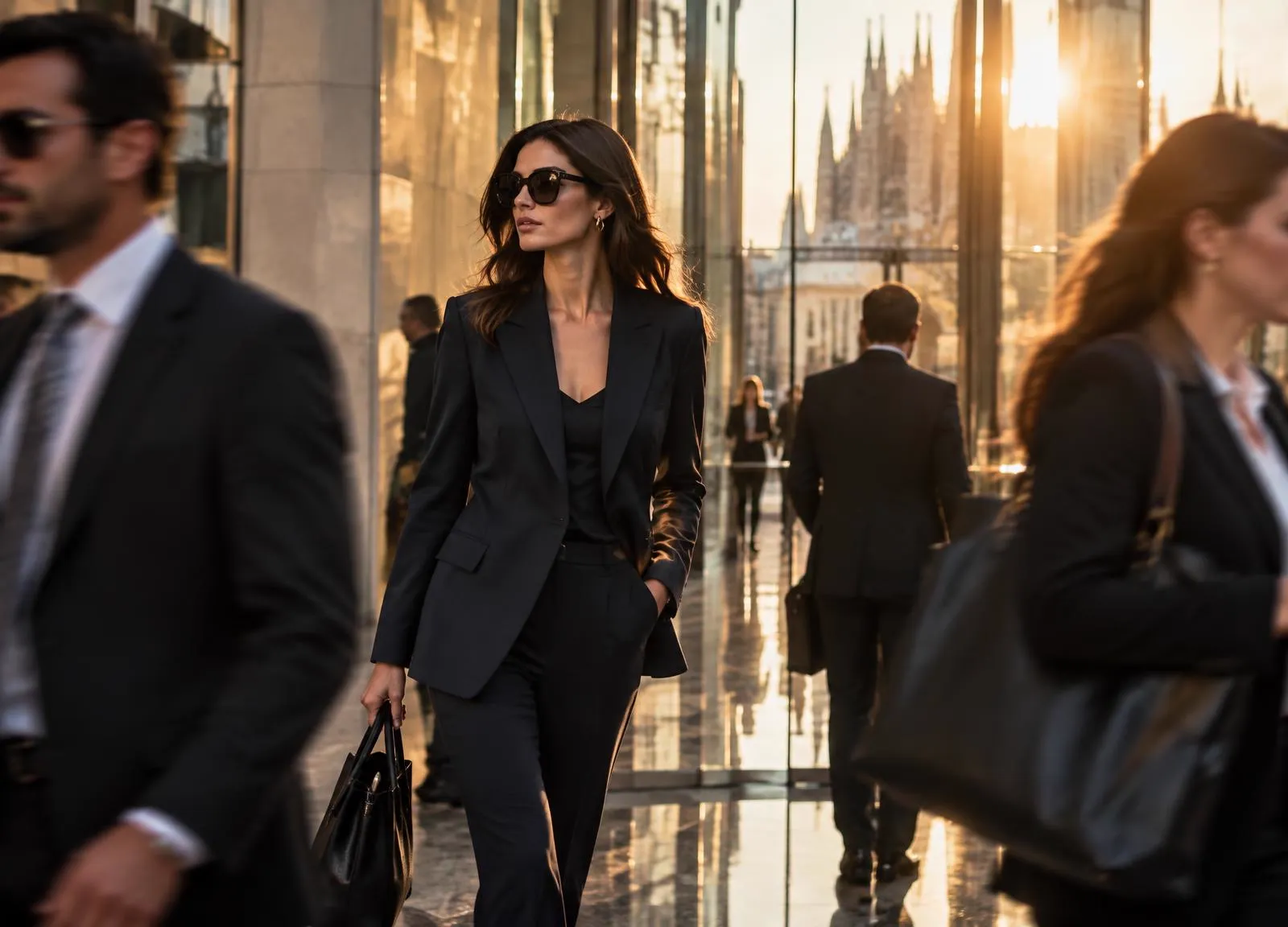
- Tailoring with a twist. Sharp blazers, wide trousers and long coats, often paired with trainers or chunky boots, or worn oversized and slightly undone.
- Vintage and second-hand. London's thriving vintage and charity-shop culture means plenty of one-off pieces, from 1990s leather jackets to 1970s prints.
- Layered texture. Knitwear over shirts, jackets over dresses, scarves and layered jewellery are particularly useful in a climate that can change in an hour.
- Playful proportions. Oversized coats, cropped jackets, long skirts with chunky shoes and unexpected volume.
- Print and colour. A willingness to mix patterns, wear bold colour or add a single statement piece.
- Subcultural references. Punk, goth, mod, skate and workwear references appear regularly and are reinterpreted in new ways.
- Practical outerwear. In February especially, trench coats, wool coats, puffers and waterproofs are essential, and they become part of the look rather than an afterthought.
Street style by season
February: autumn/winter collections
The February edition falls in the heart of the British winter, which shapes what people wear. Expect heavy coats, scarves, boots, tights, knitwear and layers, along with plenty of dark tones relieved by a bright accessory. Clothes have to survive cold, wet pavements, so footwear is often practical and bags are sturdy.
September: spring/summer collections
September is milder, so lighter fabrics, shirt dresses, tailored shorts, light jackets and trench coats come out, often layered over summer pieces held over from the season before. The look tends to be fresher and more open, with sunglasses and sandals or low shoes still in play. Because the edition is already past for 2026, you can use its approach as an evergreen reference, particularly for transitional dressing.
How to get the look
You do not need a front-row seat to borrow from street style. These formulas translate the London approach into wearable outfits.
- The tailored base. A well-cut blazer or long coat, straight or wide-leg trousers and a plain knit. Add trainers, loafers or chunky boots for contrast.
- The layered dress. A slip or shirt dress under a knit or oversized jacket, with boots and tights in cold weather.
- The vintage mix. One striking secondhand piece, such as a leather jacket or a printed shirt, with simple modern basics.
- The monochrome statement. One colour from top to toe in different textures, such as wool, cotton and leather, with a bold bag or shoe.
- The comfortable edit. A relaxed coat, jeans, a scarf and good shoes. The London approach is not about discomfort.
For more everyday ideas, you can combine these with our general outfit and trend guides, as they cover the clothes themselves in more depth.
Access and practical information
Can you attend?
London Fashion Week has traditionally combined industry shows with public-facing elements. The industry schedule is generally for invited guests, press and buyers, while public events and ticketed experiences have been offered in some seasons. Availability varies, so see our guide to London Fashion Week tickets and confirm details on the official site.
Photographing and following street style
- Respect people's space. If you want to take a photo, ask first, and never block entrances or pavements.
- Follow the official channels of the organisers and the brands for schedule updates.
- Follow street style photographers and fashion publications, which publish galleries during and after the week.
- Remember that street style is a selection. What you see online is edited from thousands of images.
What to wear if you are visiting
- Choose comfortable shoes, as you will walk and stand.
- Dress in layers, as London weather changes fast and indoor venues can be warm.
- Carry a bag that is easy to manage, with a portable charger and a small umbrella.
- Leave plenty of time for travel, as the city can be busy.
What UK readers should watch
- Emerging designers and students. London is known for supporting new talent, and the creative community shows up in the street style.
- Sustainable and vintage approaches. Resale, rental, upcycling and repair feature strongly in British fashion conversations.
- Transitional dressing. British weather makes the ability to layer and adapt a practical skill, and street style shows many ways to do it.
- Accessories. Bags, shoes, hats, scarves and jewellery often carry the look, and they are the easiest way to update an outfit.
Related fashion weeks
London is one stop on the fashion-month circuit. After London come Milan and Paris, each with its own mood: broadly, Milan leans towards polished Italian craft and Paris towards the grand, couture-adjacent end of the schedule. Street style at each reflects its city. For our London coverage as a whole, visit the London Fashion Week hub.
Frequently asked questions
When is London Fashion Week held?
London Fashion Week takes place twice a year: in February for the autumn/winter collections and in September for the spring/summer collections. Exact dates change each season, so confirm them on the official schedule.
What is London Fashion Week street style?
It is the fashion photographed around and between the shows: what editors, buyers, creatives and guests wear as they arrive and leave. It shows how people mix runway ideas with vintage, high street and personal style.
What does London street style look like?
It tends to be individual and layered: tailoring with a twist, vintage finds, playful proportions, bold colour and practical outerwear. Trends change each season, but the mix of confidence and experimentation is consistent.
Can I go to London Fashion Week?
The industry shows are generally for invited guests, but public events and ticketed experiences have been offered in some seasons. Check the official site for the current arrangements.
In short
London Fashion Week street style is a lesson in individual, layered, practical dressing. Take the tailoring, the vintage mix and the confident accessories, adapt them to your own wardrobe and weather, and check the official schedule for the details each season.