London Fashion Week February 2026 has come and gone, but the season still repays a close read. It set out how British designers were thinking about autumn/winter dressing, and many of those ideas are exactly what you can wear now that the cold has properly arrived.
This guide explains how the February edition of London Fashion Week works: the usual timing and shape of the schedule, what tends to be on show, how the street style and trends filter down to real wardrobes, and how to follow the next February season when it comes round. We have kept it evergreen, so it stays useful long after the final show.
London Fashion Week February 2026: the quick answer
London Fashion Week is run by the British Fashion Council and takes place twice a year. The February edition presents womenswear for the following autumn and winter, and it sits within the wider fashion month, which moves from New York to London, then Milan and Paris.
The February 2026 edition followed that pattern: a compact run of days in the second half of winter, after New York and before Milan. For the exact dates and running order, always go to the official London Fashion Week schedule rather than a third-party summary, because slots shift right up to the last moment. For a broader view of the year, our guide to London Fashion Week 2026 covers both seasons together.
Key dates and how the schedule works
London Fashion Week has traditionally held its two seasons in February and September. That rhythm changes only rarely, and any shift is announced well in advance by the organisers.
The schedule itself is built around a few repeating elements:
- Main runway shows. Established and emerging labels present collections on the catwalk, usually in a mix of formal venues and unconventional spaces around the city.
- Presentations and installations. Some designers prefer a static or immersive format over a runway, particularly younger labels.
- Showrooms and appointments. Behind the scenes, buyers and press view collections up close. This is the commercial engine of the week, though it is largely closed to the public.
- Talks, screenings and public programming. Recent editions have included events designed for a wider audience, with details published by the organisers each season.
Because the week is dense, designers usually have time slots rather than all-day programmes. A typical day starts mid-morning and runs into the evening, with the busiest slots clustered in the middle days.
Season-specific updates
Each edition tends to bring a few changes: a new venue, a different mix of labels, or a refreshed digital offer. Treat the official schedule as the single source of truth and check it again a few days before any event you plan to follow.
What to know about London as a fashion week
London has a distinct identity within the four major fashion capitals. It is the city most associated with discovering new talent, with a long tradition of design education and an appetite for experiment. That is why you will often see more risk-taking here than at some of its more commercial neighbours.
Three characteristics are worth keeping in mind:
- Emerging talent matters. The week gives real space to new designers alongside established names.
- Craft and tailoring sit alongside irreverence. British tailoring, knitwear and outerwear are frequent strengths, often twisted with humour or subversion.
- The audience is mixed. Alongside editors and buyers, you will see students, stylists and creatives, which feeds the city's lively street style.
Highlights: the ideas that defined the season
February is the autumn/winter season, so the dominant themes are warmth, structure and layering. Without pinning any look to a single collection, these are the directions that ran through London's winter dressing and which remain wearable now.
Outerwear as the main event
Coats were treated as statement pieces rather than afterthoughts. Think generous wool coats, structured shearling, quilted shapes and long, clean-lined trenches. A strong coat remains the single most effective investment in a British winter wardrobe.
Tailoring with a twist
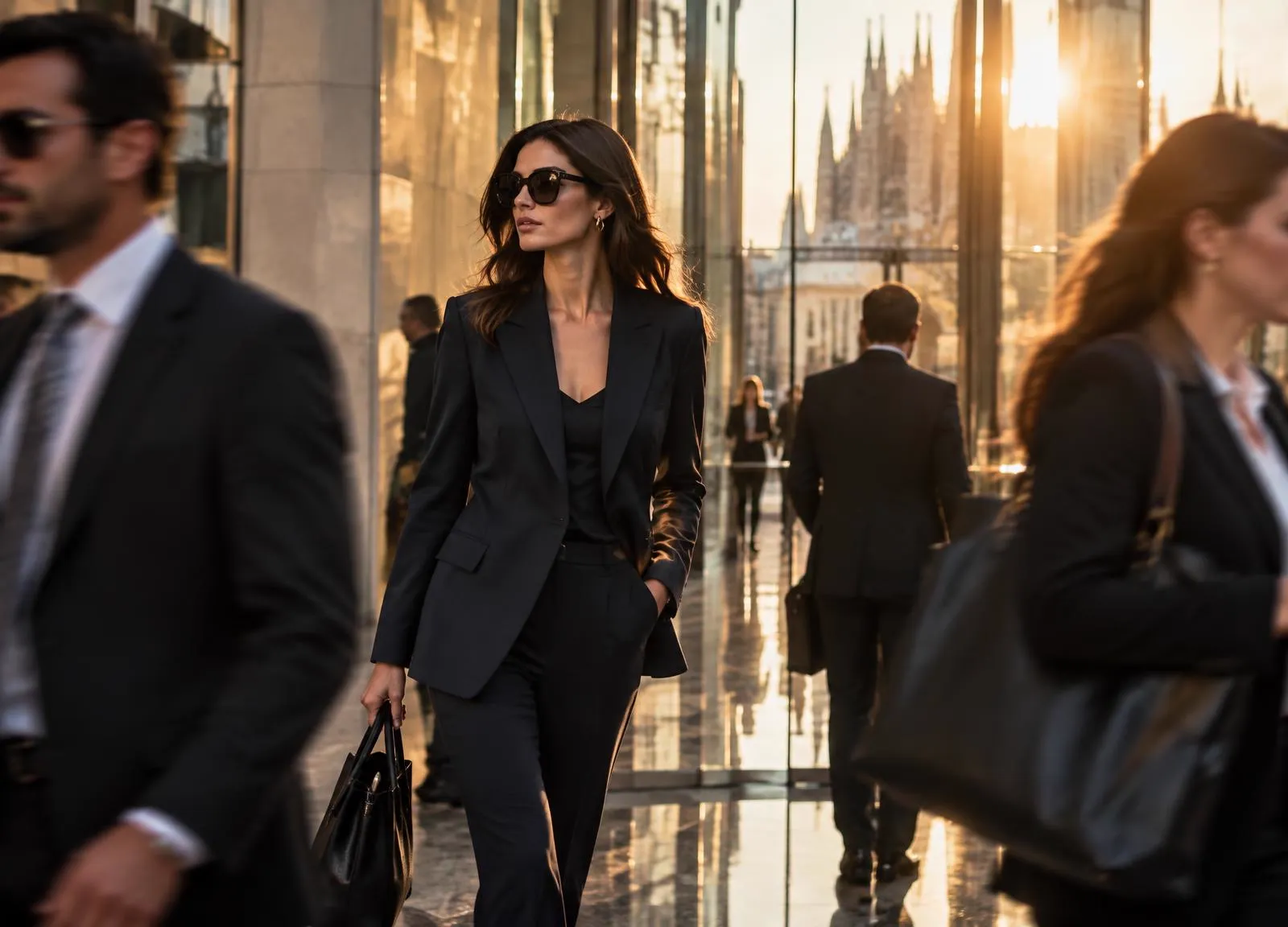
Sharp tailoring stayed central, but with looser proportions, softened shoulders or unexpected pairings. A sharply cut blazer over a knit dress, or wide trousers with a fine polo neck, captures the mood without fuss.
Knitwear and texture
Chunky knits, sheer layers, fringing and heavy textures all appeared across the programme. For daily wear, a single textured piece against plainer basics is the easiest way to borrow the idea.
A grown-up, moody palette
Expect deep browns, charcoal, bottle green, burgundy and black, lifted by the odd flash of brighter colour. These are straightforward to shop from your existing wardrobe.
Street style and trends
Outside the venues, London's street style is as much a part of the week as the shows. The city rewards individuality: mixing vintage with new, pairing high-street basics with sculptural accessories, and layering with real confidence.
Common street-style ideas from the February season included long coats over minimal separates, statement scarves, chunky boots and structured bags. If you want to see how people interpret the looks day to day, our dedicated pages on London Fashion Week street style go into the detail.
How to wear the trends in real life
- Start with one idea. Pick a coat shape, a texture or a colour and build around it.
- Anchor with basics. Neutral knitwear and well-fitting trousers keep the look wearable.
- Think in layers. British weather suits layering, so use it as your styling tool.
- Shop your own wardrobe first. Many of the strongest ideas rely on pieces you already own.
What UK readers should watch
For anyone based in the UK, the week is easy to follow even without attending. Digital streams, social media and press coverage mean you can watch shows live or catch up afterwards. London time makes this simple, and the shows sit comfortably in the UK day.
If you are interested in buying into the season, remember that runway collections reach the shops months later. Follow the designers you like, and watch for when pieces arrive in store, usually in the autumn/winter selling period.
Access and practical information
London Fashion Week is primarily an industry event, so attendance at most shows is by invitation. There is, however, some public programming in certain seasons. We cover how this works in our guide to London Fashion Week tickets, which is the place to start if you want to attend.
A few practical tips if you are in London during the week:
- Check the official site for public events and any ticketing rules.
- Allow extra time for travel, as venues are spread across the city.
- Dress for the weather. Street style photographers love a good coat, and so does February.
- Keep your phone charged. Following livestreams and updates is half the fun.
Related city Fashion Weeks
London is one stop on a longer journey. If you want to place it in context, the autumn season shows how the same themes continue; see our guide to London Fashion Week September 2026 for how the spring/summer collections build on the winter ideas. And for the full picture of the city, our London Fashion Week hub brings everything together.
Frequently asked questions
When is London Fashion Week held each year?
London Fashion Week is held twice a year, traditionally in February and September. The February edition shows autumn/winter collections, and the September edition shows spring/summer. Check the official schedule for exact days.
Can anyone attend London Fashion Week?
Most shows are by invitation for industry guests, press and buyers. Some seasons include public events and ticketed programming, so check the official channels for what is available.
Where can I find the official London Fashion Week February 2026 schedule?
The British Fashion Council publishes the official schedule. Because timings can change, rely on that source rather than unofficial lists, and check again close to any event.
What trends came out of the February season?
The themes were strong outerwear, relaxed tailoring, rich textures and a deep winter palette. These are all easy to adapt for everyday wear.
In summary
London Fashion Week February 2026 offered a clear message for winter: invest in great outerwear, play with tailoring, and let texture and colour do the talking. Use it as a style reference now, and watch the next February season for the next chapter.