The best trainers for women are the pairs that fit properly, suit what you do in them and still look right with the rest of your wardrobe. Trainers now do the work of three or four shoe types, which makes it easy to buy a pair that is good at none of them.
This guide is a buyer's briefing for UK shoppers. It covers the main trainer types, what to look for in soles, uppers and fit, how to match a pair to your day, and how to look after them. It names no models and quotes no prices, so the criteria hold whatever the shelves look like.
Quick picks: the best trainers by need
| If you want... | Choose... | Why it works |
|---|---|---|
| An everyday pair for jeans and dresses | Low-profile leather or leather-look court trainer in white or off-white | Clean, neat and easy to match |
| A comfortable all-day pair | Cushioned lifestyle trainer with a supportive midsole | Soft underfoot and forgiving on long days |
| A retro look | Suede and nylon runner-style trainer | Textured, colourful and relaxed |
| A smart-casual option | Minimal trainer in leather or a tonal finish | Works with tailoring and the office |
| A chunky, modern look | Platform or thick-soled trainer | Adds height and a fashion-led silhouette |
| Wet-weather wear | Trainer with a water-repellent upper and grippy outsole | Copes with British drizzle and pavements |
| Activity-specific use | A pair designed for running, gym or walking | Proper support for the activity |
What to look for in a trainer
Fit first
Fit matters more than any other feature. A trainer should hold your heel securely, leave room for your toes to spread, and feel comfortable across the widest part of your foot. Your feet swell during the day, so try pairs on in the afternoon or evening, and wear the socks you normally use.
Leave roughly a thumb's width between your longest toe and the end of the shoe. Walk, climb stairs and stand on your toes in the shop. If your heel lifts or your toes are pressed, move on. If you have a medical concern about foot pain or fit, speak to a podiatrist or your GP.
Upper materials
The upper determines how the trainer looks, breathes and ages. Leather is durable, wipes clean and moulds to your foot, though it takes time to break in. Suede feels softer and looks richer, but needs protection from water. Canvas is light and casual, while knit and mesh uppers breathe well and flex easily. Synthetic leather is cheaper and easy to maintain but less breathable.
Midsole and cushioning
The midsole absorbs impact and shapes comfort. Foam midsoles are soft and light. Firmer midsoles feel more stable and often last longer. If you walk a lot, choose cushioning that feels supportive rather than spongy, and check that the midsole is not worn down on one side after a few weeks.
Outsole and grip
Rubber outsoles with clear tread give better grip on wet pavements. Flat, smooth soles look neat but can be slippery. Look at the depth of the pattern and the material: softer rubber tends to grip better, while harder rubber lasts longer.
Insole and arch support
A removable insole lets you replace it or add a custom orthotic if you need one. A shaped insole with gentle arch support is more comfortable for long wear than a flat one.
Construction and finish
Check the stitching, the glue lines and the eyelets. Clean, even stitching and neat edges suggest careful making. The tongue should be padded and stay in place, and the laces should be sturdy rather than thin and slippery.
Best options by trainer type
Court and minimal trainers
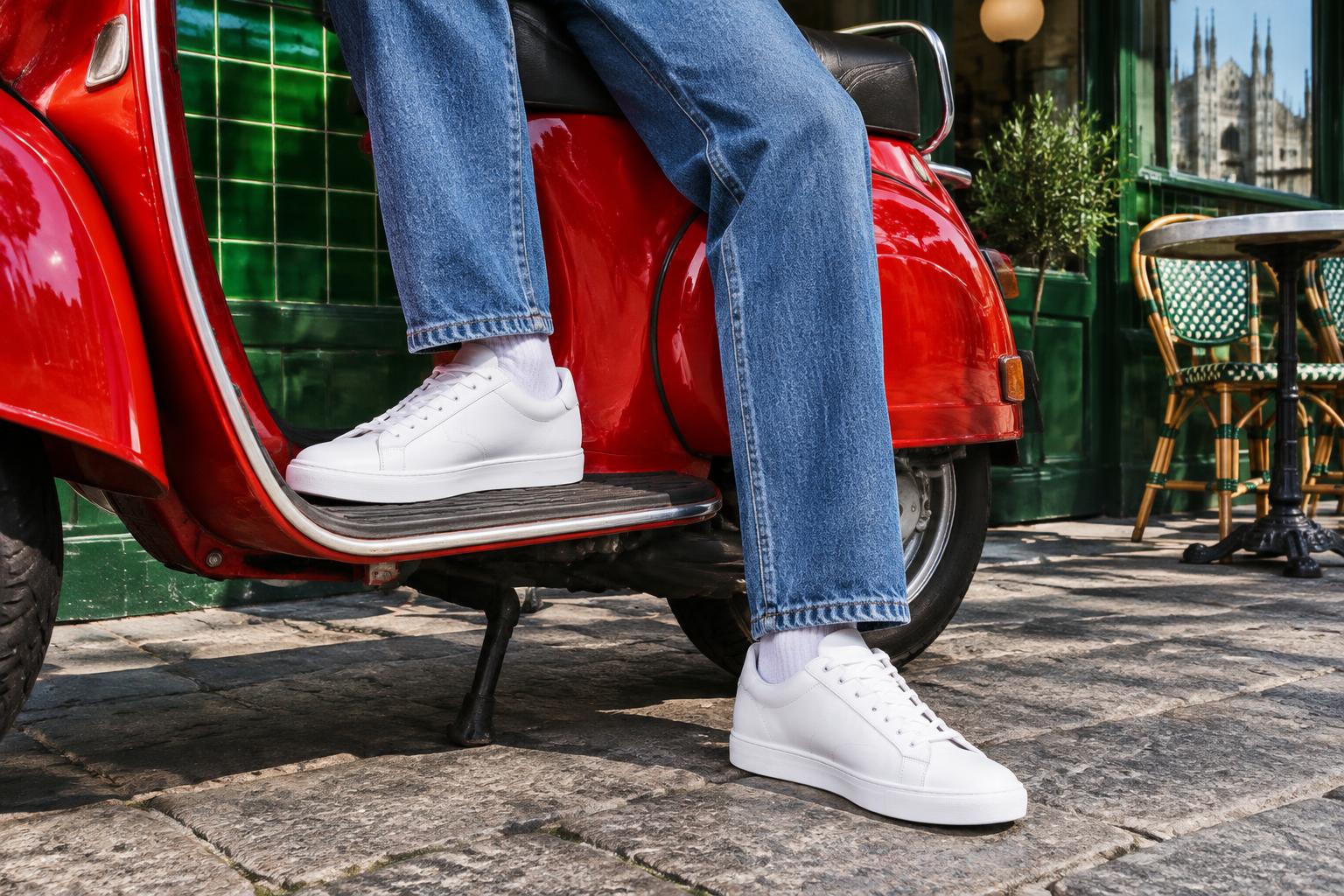
Low-profile, clean-lined trainers in white, cream or neutral tones are the most versatile choice. They pair with jeans, trousers, dresses and skirts, and smarten up casual outfits quickly.
Best for: everyday wear, travel and smart-casual dress codes. Consider: white leather shows marks but wipes clean easily. The sole is typically flatter, so consider an insole if you need more cushioning. For denim to wear with them, see our guide to the best jeans for women.
Retro runner-style trainers
These combine suede and mesh panels with layered soles. They look relaxed and colourful and suit casual outfits.
Best for: weekends, travel and relaxed dressing. Consider: mixed materials need different cleaning methods. Protect suede with a suitable spray, and brush it regularly.
Chunky and platform trainers
Thick soles give height and a fashion-forward profile. They work with wide-leg trousers, midi skirts and oversized layers.
Best for: outfits that need balance at the hem. Consider: weight matters. Pick up the shoe, since a heavy sole can tire you on long walks. Check the sole flexes at the ball of the foot.
Slip-on and laceless trainers
Convenient and light, these suit travel and quick errands.
Best for: easy everyday wear and warm weather. Consider: a secure heel fit is essential. Elastic panels should hold the shoe in place without squeezing.
High-top trainers
These add ankle coverage and a strong style statement. Canvas versions are casual, and leather versions are more polished.
Best for: cooler months and street-style outfits. Consider: try them with the trousers you plan to wear, since the shaft can bunch under tight hems.
Sports-specific trainers
If you run, train or walk long distances, a purpose-built shoe is better than a fashion trainer. Running shoes are designed for forward motion, training shoes for lateral stability, and walking shoes for all-day comfort. For distance walking, see our guide to the best walking trainers for women, which covers that need in depth.
Best for: regular exercise or long days on your feet. Consider: buy the shoe for the activity, and keep fashion pairs for everyday wear.
How to choose by lifestyle
- Commuting on foot: cushioned, supportive and water-resistant pairs earn their place. Consider a spare pair to alternate.
- Office with a relaxed dress code: minimal leather trainers in white or neutral shades look tidy with trousers and blazers.
- Travel: lightweight, easy-to-clean pairs that work with several outfits keep luggage light.
- Weekends and casual days: retro and chunky styles bring character.
- Wide or narrow feet: look for brands offering different widths, and check how the upper stretches.
Colour, trends and styling
White, cream, grey and black are the most adaptable. They go with nearly everything and stay relevant across seasons. Metallic, pastel and bold colourways can enliven a simple outfit, but they work best if you already own a neutral pair.
For styling, match the shape to the outfit. Low-profile trainers suit tailored trousers and dresses, and chunkier pairs balance wide trousers and longer skirts. Keep socks in mind: low-cut or no-show socks suit minimal styles, while visible ankle socks add a sporty touch.
Accessories finish the look. A simple watch works well with casual outfits, and our guide to the best watches for women can help you choose one. A fresh scent also sets off a relaxed look, as explained in our guide to the best perfume for women.
Budget tiers: what changes as you spend more
- Entry-level: works for short-term trends and occasional wear. Check cushioning, sole thickness and the quality of the stitching.
- Mid-range: generally brings better materials, more refined cushioning and longer life. A reliable tier for daily trainers.
- Investment: premium leathers, hand-finished details and resoleable construction. Worth considering for a classic pair you plan to wear for years.
Care and longevity
Clean your trainers regularly, following the material. Wipe leather with a damp cloth, brush suede, and hand-wash canvas gently. Remove laces and insoles before cleaning. Let shoes dry naturally, away from direct heat, which can warp glue and soles.
Rotate pairs, if you can, to let them rest between wears. Replace insoles when they flatten, and replace the shoes once the midsole is compressed or the tread is worn smooth.
Common mistakes to avoid
- Buying for looks without testing the fit in the afternoon.
- Choosing fashion trainers for long-distance walking or running.
- Ignoring sock thickness when sizing.
- Skipping waterproofing for suede and light fabrics.
- Keeping trainers long after the cushioning has gone.
- Buying only one colour and never rotating pairs.
Frequently asked questions
What are the most comfortable trainers for women?
Comfort depends on your foot shape and use, but look for a secure heel fit, a cushioned yet stable midsole, a roomy toe box and a removable insole. Try several pairs and walk around before you decide.
How should trainers fit?
There should be about a thumb's width in front of your longest toe, a snug heel and no pressure across the widest part of the foot. Try them on later in the day with your usual socks.
Can I wear white trainers every day?
Yes, if you accept some marks and clean them regularly. Leather and synthetic leather wipe clean easily, while canvas and suede need more care. Keep a cleaning cloth or brush at hand.
How often should I replace my trainers?
When the cushioning feels flat, the tread is worn smooth or the shoe loses its shape. Everyday trainers wear out more slowly than running shoes, but check them regularly for signs of wear.
Are trainers suitable for the office?
In many workplaces, yes. Choose a clean, minimal pair in leather or a tonal finish, keep them in good condition and pair them with tailored trousers or a smart dress.
In short
The best trainers for women balance fit, support and style. Prioritise how the shoe feels over the trend, choose a type that matches your daily routine, and look after your pairs so they last. For more footwear options, browse our full guide to women's trainers.