Paris Fashion Week 2026 is the finale of the four-city fashion month, and it carries the weight of that position. It is the busiest and most theatrical week on the calendar, home to the largest number of established houses, and the place where the season's big statements tend to land.
This guide explains how Paris Fashion Week works across its two annual ready-to-wear seasons, what the city's collections tend to emphasise, how UK readers can follow the week and what is easiest to take into a real wardrobe. Both 2026 seasons are now over, so we treat this as an evergreen reference for whenever the calendar starts again.
Paris Fashion Week 2026 at a glance
Paris Fashion Week takes place twice a year for womenswear ready-to-wear. The late winter season, spanning the end of February and the start of March, presents autumn/winter collections. The autumn season, spanning the end of September and the start of October, presents spring/summer. Both close the international circuit after New York, London and Milan.
The week is organised under the Fédération de la Haute Couture et de la Mode, which publishes an official calendar every season. For exact days, rely on that rather than a news roundup, because additions and changes continue right up to the opening. If your main interest is the running order, our Paris Fashion Week schedule guide explains the programme in more detail.
Key dates and how the season is organised
Rather than quote dates that can shift, here is the structure you can rely on:
- Late winter season. Autumn/winter ready-to-wear, closing the February/March round.
- Autumn season. Spring/summer ready-to-wear, closing the September/October round.
- Haute couture, separately. Couture is shown at other points in the year, usually in January and July, on its own calendar.
- Time zone. Paris is typically one hour ahead of the UK, so livestreams are simple to follow.
Season-specific updates
Every edition changes a little: new venues, different participants, a revised public programme. Check the official calendar again just before any show you plan to watch, and treat any date seen elsewhere as provisional.
What to know about Paris as a fashion capital
Paris is the spiritual home of couture and still the city where the largest, most ambitious productions are staged. Shows can take place in historic palaces, museums, gardens and purpose-built sets, and the scale of the spectacle is part of what makes the week distinctive.
Three things set Paris apart:
- Creative range. Heritage houses, avant-garde labels and young independents all show side by side.
- Spectacle. Sets, soundtracks and styling are treated as part of the collection.
- A strong sense of identity. French dressing, from the Left Bank wardrobe to the Parisian approach to tailoring, forms a constant reference.
Designers, shows and highlights: the ideas to look for
Rather than assign any look to a single designer, here are the directions Paris tends to explore, which stay useful long after the season ends.
Sculpted and architectural shapes
Paris is the home of the dramatic silhouette: strong shoulders, nipped waists, voluminous skirts and sculptural outerwear. Translate it with one dramatic piece surrounded by quiet basics.
Effortless Parisian dressing
Alongside the spectacle, many collections celebrate a lighter touch: a trench, a striped knit, a simple dress and a considered bag. This is the part of Paris that is easiest to wear.
Craft and surface
Embroidery, lace, feathers, beading and unusual textures often feature, particularly in evening. For daily wear, a single embellished or textured piece against plain tailoring is enough.
Tailoring with attitude
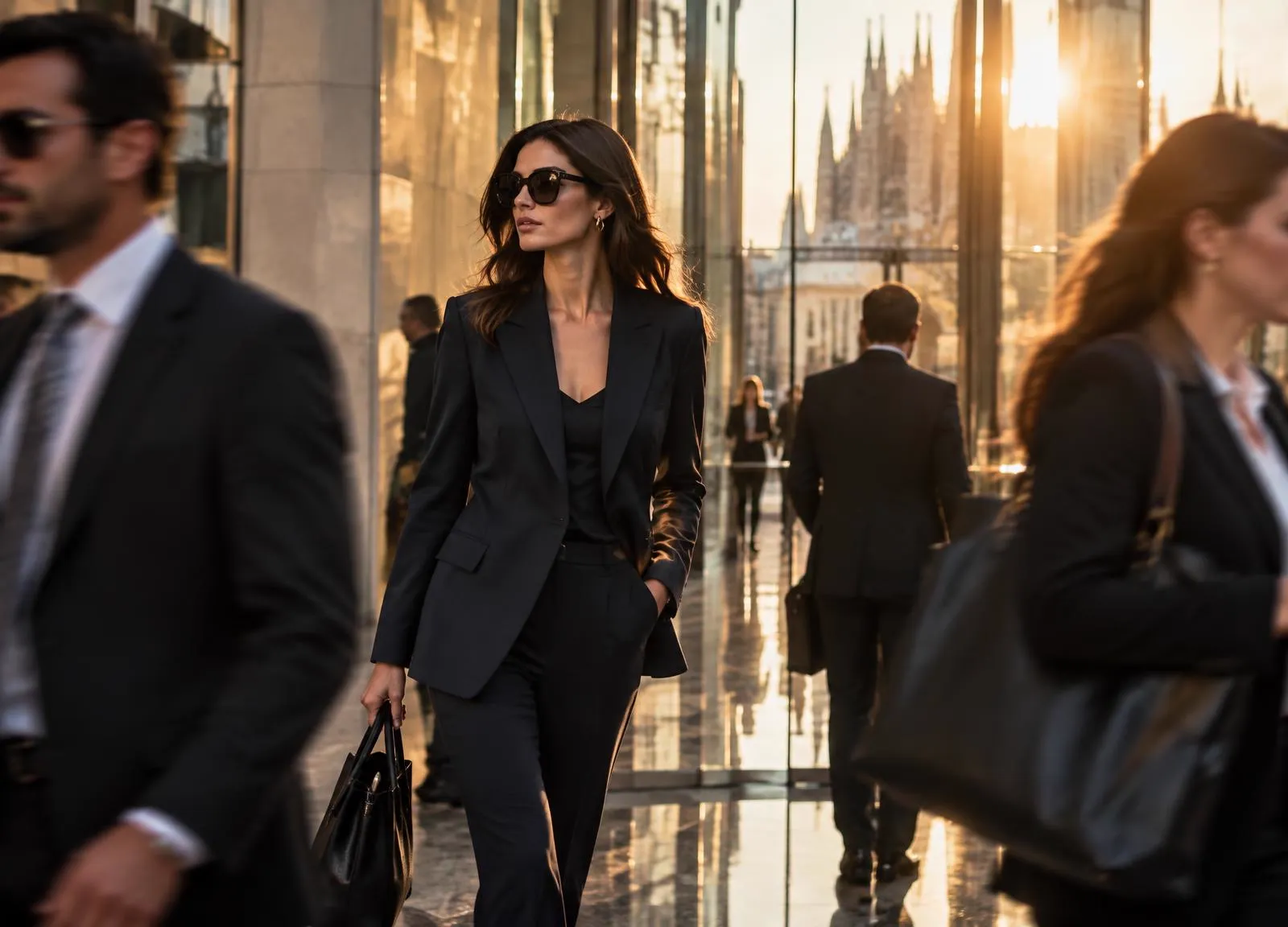
Blazers and trousers are cut with a sharp idea, such as an exaggerated lapel, a cropped length or an unexpected fabric. A well-cut suit remains one of the most dependable Parisian staples.
Street style and trends
Paris street style is often considered the most inventive of fashion month. The city mixes vintage with new, high with low, and tends to favour personal style over head-to-toe looks. Expect to see trench coats, tailored jackets, striking boots, slouchy knitwear and an expert sense of proportion.
Common ideas include:
- A well-worn leather jacket over a feminine dress
- Wide trousers with a sharp, fitted knit
- Statement sunglasses and small, structured bags
- Dark palettes lifted by one bright or metallic accent
If you want to borrow the Parisian approach, concentrate on the details: how a hem falls, how a sleeve is pushed up, how a scarf is knotted. They tell you more than any single outfit.
Three Paris-inspired outfit formulas
- Everyday: a trench or tailored coat, striped knit, straight jeans and flat boots.
- Work: a sharp blazer, silk or cotton shirt and fluid trousers, with a structured bag.
- Evening: a slip dress or tailored jumpsuit, a leather jacket and a bold earring.
What UK readers should watch
With just an hour's difference, Paris is among the easiest weeks to follow from the UK. Livestreams, social posts and press coverage land at convenient times, and many shows can be watched live between other commitments.
Since Paris closes the circuit, it is also the best place to see how the season fits together. Compare it with London Fashion Week 2026 for the contrast with the city's more experimental spirit, and with Milan Fashion Week 2026 for the tailoring-led polish that precedes it. For a side-by-side view of timings, the London Fashion Week schedule is a helpful anchor.
Access and practical information
Most Paris Fashion Week shows are by invitation for editors, buyers, stylists and guests. Public access is limited, although some seasons include open events, exhibitions or city programming. Use official channels for any tickets and be wary of unofficial offers.
If you plan to visit during the week:
- Book accommodation and travel early, as Paris is very busy.
- Allow generous time to cross the city, as venues are spread out.
- Check current entry requirements for France on official government sources.
- Wear comfortable shoes and prepare for changeable weather.
Related city Fashion Weeks
Paris is the final stop, so it makes sense to see it in context. Our Paris hub brings together everything we publish on the city, and the guides above place it alongside its neighbours.
Frequently asked questions
When does Paris Fashion Week take place?
Paris Fashion Week takes place twice a year for womenswear ready-to-wear: late winter for autumn/winter collections and late September into early October for spring/summer. Check the official calendar for exact days.
Is Paris Fashion Week open to the public?
Most shows are by invitation, though some seasons include public events. Always use official sources for tickets.
What is the difference between Paris Fashion Week and haute couture week?
Paris Fashion Week covers ready-to-wear collections. Haute couture is presented separately, usually in January and July, with handmade, made-to-order pieces.
How can I follow Paris Fashion Week from the UK?
Watch livestreams, follow publications and brands on social media and read next-day coverage. Paris is typically one hour ahead of the UK, so times are easy to manage.
In summary
Paris Fashion Week 2026 once again closed the circuit with spectacle, craft and a clear sense of identity. Take the wearable lessons, from tailoring to effortless layering, and watch the next season for the next chapter.