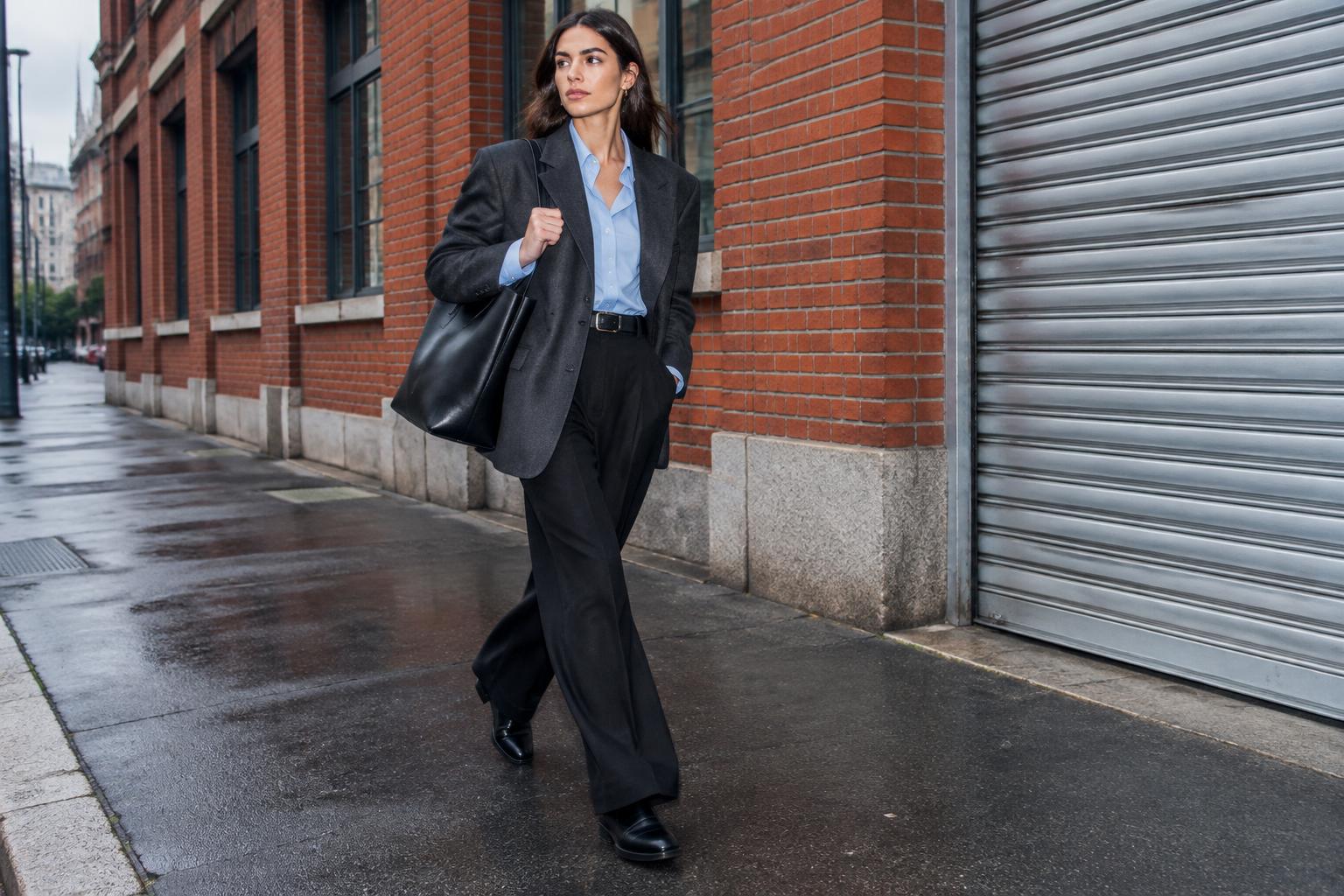
Most mornings, the problem isn't a lack of clothes. It's the decision. You stand in front of a full closet and nothing seems to go together. Outfit formulas solve that. They're simple, repeatable templates, such as "jeans + knit + loafers," that you fill in with whatever pieces you own.
Stylists rely on formulas because they work. Once you know a handful, you can create dozens of outfit combinations in seconds, pack for a trip without overthinking and shop with a clear sense of what's missing. This guide covers the essential easy outfit formulas, how to style them, what to avoid and how to adapt each one by season and setting.
For more on building a closet that makes this effortless, explore our Wardrobe Building hub.
How Outfit Formulas Work
An outfit formula is a recipe with slots rather than specific ingredients. "Wide-leg pants + fitted top + pointed flats" can mean black wool pants with a cashmere turtleneck in winter, or cream linen pants with a ribbed tank in summer. The proportions and logic stay the same.
Most good formulas follow a few principles:
- Balance volume. Pair something loose with something fitted.
- Include one anchor. A neutral base piece that grounds the outfit.
- Add a third piece. A jacket, cardigan, vest or statement accessory turns a basic pairing into a finished look.
- Let shoes set the mood. The same outfit reads casual with sneakers and dressy with heels.
When a formula is built on versatile pieces, it also becomes the backbone of a capsule wardrobe, where every item mixes with every other.
Core Outfit Formulas
Here are ten combinations that work for most bodies, budgets and lifestyles.
1. Jeans + knit + loafers
The ultimate everyday formula. Straight or wide-leg jeans, a crewneck or V-neck sweater, and loafers. Tuck the front of the knit to show the waist, if you like.
2. Tailored pants + tee + blazer
Polished but relaxed. A plain white or black tee keeps tailoring from feeling stiff. Finish with sneakers for weekends or pointed flats for the office.
3. Midi skirt + fitted top + boots
A slip, pleated or A-line midi skirt with a bodysuit or fine knit. Knee-high or ankle boots in cooler months, sandals in summer.
4. Dress + jacket + sneakers
Any day dress becomes more casual and modern with a denim jacket, leather jacket or blazer and clean sneakers.
5. Monochrome base + contrasting coat
Wear one color head to toe, then add a coat or jacket in a contrasting shade. Gray with camel, black with cream, navy with tan.
6. Wide-leg pants + cropped top
Volume on the bottom, a shorter, fitted top above. This creates a long leg line, especially with a high rise.
7. Button-up shirt + shorts + sandals
A crisp oversized shirt, tailored or denim shorts and flat sandals. Leave the shirt open over a tank on hot days.
8. Sweater dress + tights + boots
The cold-weather equivalent of a sundress. Add a long coat and a scarf for full winter coverage.
9. Matching set + layer
A coordinated knit or linen set with a trench, cardigan or denim jacket. Instant structure with minimal effort.
10. Leggings + oversized layer + sneakers
For comfortable, active days, pair opaque leggings with a long sweatshirt or shirt and a structured outer layer.
Styling Details That Elevate Any Formula
Use a tuck
A full tuck, half tuck or front tuck defines the waist and gives shape to looser tops. It's one of the easiest ways to make an outfit look intentional.
Roll, push and cuff
Pushing up sleeves, cuffing jeans and rolling shirt cuffs adds an effortless touch. It also adjusts proportions, showing a wrist or ankle to lighten the look.
Stick to a color story
Choose two or three colors per outfit. Neutrals plus one accent color is a reliable rule. This keeps outfit combinations cohesive even when the pieces are very different.
Add texture
When an outfit feels flat, mix textures rather than colors: knit with leather, denim with silk, linen with suede. Texture adds richness without noise.
Finish with a "third piece"
A vest, a scarf, a belt or a statement necklace often makes the difference between "dressed" and "styled." Keep a few of these within easy reach.
Shoes and Accessories
Shoes and accessories let a single formula stretch across many occasions.
Shoes that work with most formulas
- White sneakers: casual, modern, fits nearly everything.
- Loafers: polished but comfortable.
- Ankle boots: an easy transition-season option.
- Pointed flats or kitten heels: dressier without discomfort.
- Strappy sandals: for warm-weather and evening formulas.
Accessories to rotate
- A structured tote for work and a small crossbody for weekends
- Gold or silver jewelry, chosen as a consistent family
- A slim leather belt
- Sunglasses and a scarf
- A watch or stack of bracelets
Keep accessories visible and organized so you actually use them. If your closet makes that hard, these closet organization ideas can help you set up a system where every piece is easy to see and grab.
What to Wear and What to Avoid
| Do | Avoid |
|---|---|
| Balance one loose piece with one fitted piece | Loose on top and bottom without any shape |
| Limit each outfit to two or three colors | Five competing colors and prints |
| Use neutral anchors | Building formulas around single-use statement pieces |
| Repeat formulas that work for you | Forcing a formula that feels uncomfortable |
| Adjust shoes for the occasion | Wearing the same shoes for every setting |
Also, avoid treating formulas as strict rules. They're a starting point. If a formula doesn't suit your body or lifestyle, tweak it.
Variations by Season
Spring
Light jeans, a striped tee and a trench. Or a midi skirt, a fine knit and ballet flats. Layering is still useful as temperatures change daily.
Summer
Shorts or linen pants with a button-up shirt, sundresses with sandals, matching linen sets. Keep fabrics breathable and colors light.
Fall
Jeans with a chunky knit and boots, tailored pants with a turtleneck and blazer, or a midi skirt with a sweater and knee-high boots.
Winter
Sweater dresses with tights, monochrome knit outfits with a long coat, and wide-leg wool pants with a cashmere sweater.
Variations by Setting
At work
The tailored pants + tee + blazer formula and the midi skirt + fitted top + boots formula are office favorites. Choose fabrics with some structure and closed-toe shoes if your workplace is formal.
Weekend and errands
Jeans + knit + sneakers, leggings + oversized layer + sneakers, or a dress + denim jacket + sneakers.
Nights out
Swap in a satin or sequin piece in one slot. A slip skirt + fitted top + heels, or wide-leg pants + a sparkly cropped top, work beautifully.
Concerts and events
Formulas make event dressing much easier. Denim shorts + band tee + boots, or a mini skirt + fitted top + jacket, are simple starting points. For more inspiration by venue and genre, see our guide to concert outfit ideas.
Travel
Choose two or three formulas and pack pieces that fit all of them. A neutral palette means every top works with every bottom, multiplying your outfit options.
How to Find Your Personal Formulas
Generic formulas are useful, but your own formulas are even better. Here's how to discover them:
- Track what you wear. For two weeks, note or photograph your outfits. Look for patterns in the ones you felt best in.
- Name the structure. Turn those favorite looks into templates, for example "straight jeans + longline cardigan + boots."
- Write them down. Keep a list on your phone or inside your closet door.
- Spot the gaps. If you love a formula but lack a piece to complete it, that's your next purchase.
- Rotate and refine. Swap pieces in and out each season.
An example in practice
Say your favorite outfits all share a pattern: wide-leg pants, a fitted knit and loafers. That's your formula. In winter, it becomes charcoal wool pants, a black turtleneck and leather loafers. In spring, it's ecru denim, a striped long-sleeve tee and suede loafers. In summer, linen pants, a ribbed tank and flat sandals stand in. Three seasons, one formula, zero decision fatigue. Then repeat the exercise with a dress-based formula and a skirt-based one, and you'll have most of your week covered.
For even more starting points, our full collection of outfit ideas is a great source of combinations to adapt.
Frequently Asked Questions
What is an outfit formula?
An outfit formula is a repeatable template, like "jeans + knit + loafers," that you fill in with different pieces from your closet. It takes the guesswork out of getting dressed. Once you know a few, you can create many combinations quickly.
What are the easiest outfit formulas for beginners?
Start with jeans + knit + loafers, dress + jacket + sneakers and tailored pants + tee + blazer. They rely on basics most people already own and are easy to dress up or down. Add a third piece, such as a belt or scarf, to finish the look.
How many outfit formulas do I need?
Four to six formulas that suit your lifestyle are usually enough. Choose ones that cover your main settings, such as work, weekends and evenings. Adjust them seasonally by swapping fabrics and layers.
Do outfit formulas work with a capsule wardrobe?
Yes, they work very well together. A capsule wardrobe gives you a small set of mix-and-match pieces, and formulas show you how to combine them. Together they make getting dressed faster and shopping more focused.
The Bottom Line
Outfit formulas take the stress out of getting dressed. Learn a handful, adapt them to your style and season, and you'll create polished, repeatable looks from the clothes you already own. Start with one formula this week and see how much easier your mornings become.