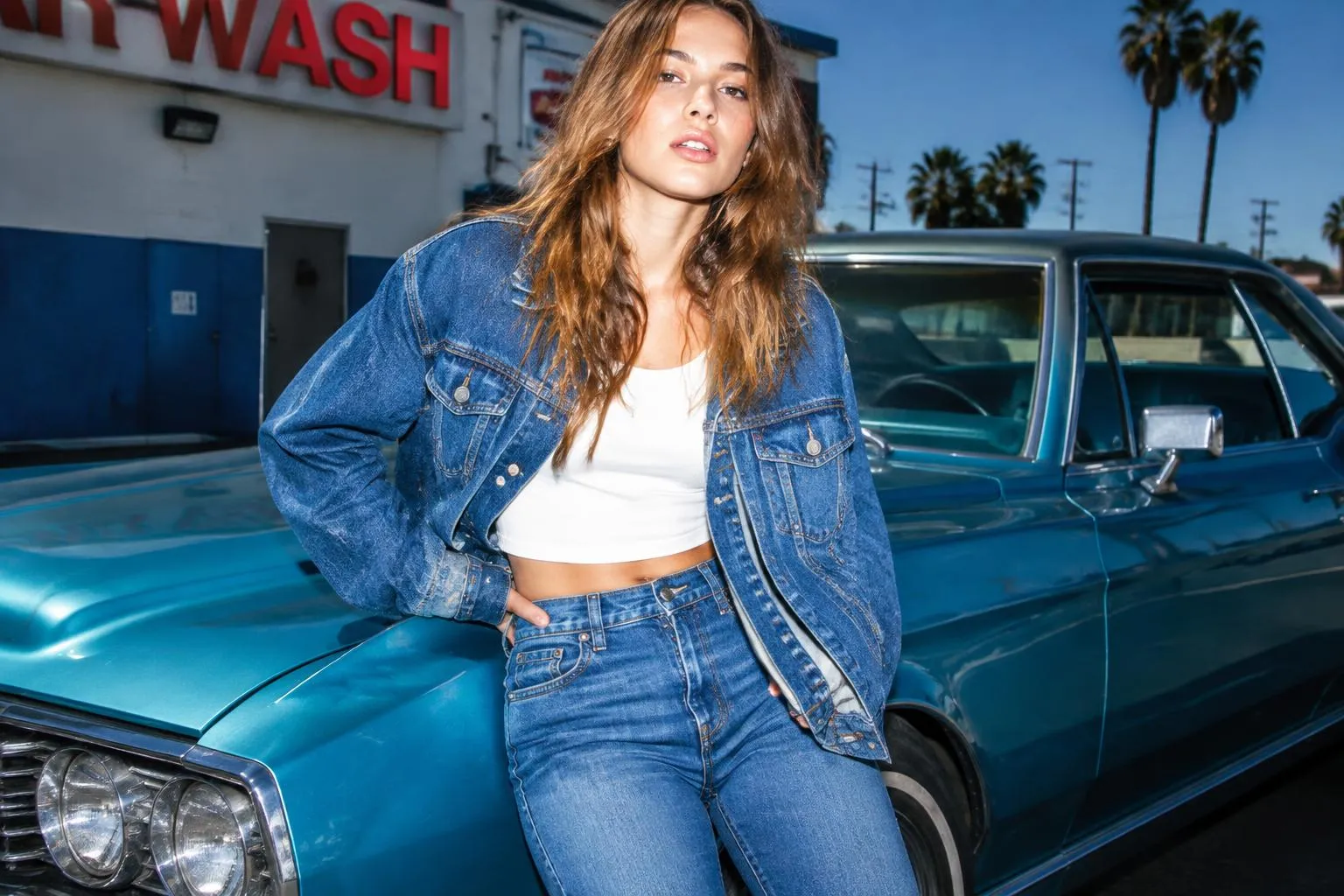
The wolf cut is the haircut for people who want texture, movement and a little attitude. Built on heavy layering at the crown and lighter, wispier lengths below, it has a slightly wild, tousled outline that looks best when it isn't perfectly styled.
In this guide you'll learn what defines a wolf cut, how it differs from similar layered cuts, which hair types and face shapes it suits, how to ask for it, and how to style and maintain it at home. Whether you're considering a soft, grown-out version or a bold, choppy one, you'll know exactly what to expect.
What Is a Wolf Cut?
A wolf cut, sometimes called a wolf haircut, combines short, choppy layers on top with longer, thinner lengths at the back and sides. The result is a shape with lots of volume at the crown that tapers toward the ends, a little like a wolf's ruff. It usually comes with bangs, most often curtain-style or choppy and textured.
The cut borrows ideas from two older styles: the shag, with its feathered layering, and the mullet, with its contrast between a shorter top and longer back. A wolf cut sits between them. It has more contrast than a typical shag but blends far more softly than a classic mullet.
Key features to recognize:
- Volume at the crown created by short, stacked layers.
- Thinned-out, piecey ends rather than a solid perimeter.
- Face-framing pieces and usually some form of bangs.
- A deliberately undone finish that looks best with natural texture.
Who Does a Wolf Cut Suit?
The wolf cut is surprisingly adaptable, but hair texture makes a real difference to how it looks and how much work it takes.
By hair texture
Wavy hair is the natural home of the wolf cut. The layers release waves, and the shape practically styles itself with a little cream or spray.
Curly hair can look fantastic in a wolf cut, giving shape and lift at the crown that curls sometimes lack. Make sure the stylist cuts with your curl pattern in mind, ideally dry or in your natural texture, to avoid uneven layers once curls spring up.
Straight hair works too, but expect to put in more styling effort. Without texture products or a bit of heat, the layers can fall flat and look more like a choppy layered cut than a true wolf cut.
Fine hair benefits from the volume at the crown, but go easy on thinning the ends. Too much texturizing can leave the bottom looking sparse.
Thick hair is a great candidate because layering removes weight. Ask your stylist to debulk from within so the shape doesn't get puffy.
By face shape
- Round faces: keep volume on top and longer face-framing pieces below the chin to add length.
- Long faces: bangs and width at the sides help balance proportions.
- Square faces: soft, wispy layers around the jaw diffuse strong angles.
- Oval and heart-shaped faces: most variations work; heart shapes benefit from a bit of fullness near the chin.
Wolf Cut Variations
Not every wolf cut is shaggy and dramatic. The style comes in several versions, from barely-there to bold.
The soft wolf cut
Subtle layering, longer lengths and gentle curtain bangs. This version blends smoothly and grows out easily. It's a great first step if you're not sure about a big change, and it's the most office-friendly take on wolf cut women often ask for.
The long wolf cut
The layers start higher on the head, but the length is kept at or past the shoulders. You get the signature volume at the crown while retaining length. If you'd like to keep longer hair but want more movement, also explore our ideas for hairstyles for long hair.
The short wolf cut
Cropped around the neck with heavy layering on top. It feels edgier and more androgynous. If you like the idea of going even shorter, our guide to the pixie cut is worth a look, and our roundup of hairstyles for short hair shows other short options.
The curly wolf cut
Layers tailored to your curl pattern, with plenty of volume and definition. Diffusing brings out the shape.
The wolf cut with bangs
Bangs are a near-default part of the look, but the type changes the effect. Wispy curtain bangs keep things soft; choppy, eye-skimming bangs add edge. A fuller fringe gives a more graphic, retro feel.
The wolf cut with contrast
A more pronounced short-top, long-back silhouette that nods more openly to the mullet. It's a bolder statement and needs more frequent shaping.
How to Ask for a Wolf Cut
Because the term covers so many variations, you need to be specific. Here's what to cover in your consultation.
- Bring several reference photos. Look for photos of people with similar hair texture and density. Point out what you like in each, such as the bangs in one photo or the length in another.
- Agree on length. Show exactly where you want the longest pieces to land and how short you'd like the top layers.
- Discuss the contrast. Do you want seamless blending, or a visible difference between the top and the back?
- Choose your bangs. Curtain, wispy, choppy, or none. Ask how they'll look when air-dried.
- Talk about thinning. If you have fine hair, ask the stylist to be careful with texturizing at the ends.
- Explain your routine. Air-drying versus blow-drying makes a difference to how the cut should be built.
A stylist skilled in razor cutting or point cutting is ideal, since both techniques create the piecey, feathered texture the wolf cut relies on.
How to Style a Wolf Cut
The beauty of the wolf cut is that it's meant to look a little messy. Still, a few techniques will make it look intentional rather than accidental.
Air-dry for natural texture
- Start with damp, not soaking, hair.
- Apply a leave-in conditioner, then a curl cream or texturizing lotion.
- Scrunch upward to encourage waves.
- Let it dry without touching, or diffuse on low heat for extra volume at the crown.
- Once dry, scrunch out any crunch and separate pieces with your fingertips.
Blow-dry for volume
Rough-dry until about 80 percent dry, then lift the roots at the crown with a round brush. Flip your head upside down for the final minutes. Direct the bangs away from your face for a curtain effect.
Add definition with heat
On straight hair, use a flat iron to create random bends in sections, twisting the iron away from your face. Leave the ends straight for a modern finish. A small curling wand can add texture to individual pieces.
Finish with the right products
- Texturizing spray: for grit, separation and hold.
- Sea salt spray: for a beachy, matte texture on waves.
- Light paste or wax: worked through the ends to define pieces.
- Dry shampoo: at the roots on day two or three to restore lift.
Avoid heavy oils and rich creams on straight or fine hair; they weigh the layers down.
Practical Notes: Maintenance and Growing It Out
Trims
A wolf cut needs regular shaping to keep its silhouette, usually every six to eight weeks. Shorter, more dramatic versions need attention sooner. Bangs may need a quick trim in between.
Day-to-day care
- Use a heat protectant whenever you style with hot tools.
- Refresh with water or a styling spray on second-day hair rather than washing every day.
- Sleep with hair loosely tied on top of your head or on a smooth pillowcase to protect texture.
Growing it out
The wolf cut grows out reasonably gracefully, especially softer versions. As the top layers lengthen, ask your stylist to gradually blend them into the lengths. The shape often transitions into a classic layered cut along the way, so there's no awkward phase to dread.
Wolf Cut vs. Similar Layered Cuts
It's easy to confuse the wolf cut with other textured cuts. Here's a quick comparison:
| Cut | What sets it apart |
|---|---|
| Wolf cut | Heavy crown volume, tapered piecey ends, usually bangs |
| Shag | Feathered layers throughout, softer contrast between top and bottom |
| Mullet | Clear short-top, long-back contrast with less blending |
| Layered cut | Layers for movement, but without the dramatic crown volume |
The wolf cut is the middle ground: more structured than a shag, softer than a mullet.
Common Mistakes to Avoid
- Over-thinning fine hair. You need enough density at the ends to hold the shape.
- Expecting it to look styled with no product. Most wolf cuts need at least a texture spray or cream.
- Choosing a stylist without layering experience. This cut relies on technique; precision matters.
- Brushing it flat. Finger-styling keeps the texture alive; heavy brushing smooths it out.
- Skipping trims. Without regular shaping, the crown layers grow heavy and the silhouette loses definition.
Frequently Asked Questions
Does a wolf cut work on straight hair?
Yes, but it requires more styling. Texturizing spray, a quick flat-iron bend or a round-brush blow-dry will help the layers show. Without product, the cut can look like a standard layered style.
What is the difference between a wolf cut and a shag?
A wolf cut has more volume at the crown and a stronger contrast between shorter top layers and longer, thinner ends. A shag has feathered layers throughout and usually blends more evenly.
Is a wolf cut high maintenance?
It's low effort day to day if you have natural texture, since the look is meant to be undone. It does need regular trims, usually every six to eight weeks, to hold its shape.
Can I get a wolf cut with curly hair?
Absolutely. Curly wolf cuts can look beautiful, with lift at the crown and defined curls throughout. Choose a stylist experienced in cutting curls and discuss how the cut will look once your curls dry.
How long does it take to grow out a wolf cut?
That depends on how short the top layers are and how fast your hair grows. Softer versions blend into a layered cut fairly quickly, while dramatic versions take longer. Regular trims during the process keep it looking deliberate.
The Bottom Line
The wolf cut rewards anyone who loves texture and wants a haircut that looks better slightly undone. Choose the version that suits your hair type, be clear with your stylist about contrast and bangs, and keep a texture product on hand. For more cuts and styling guides, explore our Hair section.