The best work outfits do two jobs: they make you feel confident and capable, and they stop you thinking about clothes once you have left the house. The trick is not a larger wardrobe but a smaller set of reliable formulas that you can adjust for the weather, the meeting and the dress code.
This guide covers what to wear to work in the UK, the outfit formulas that repeat well, the shoes and accessories that finish them, and the mistakes that most often undermine a good outfit. It suits a range of workplaces, from traditional offices to hybrid and creative environments.
What to wear to work
Dress codes vary, so start by reading your workplace honestly. Look at what senior colleagues wear, think about who you meet during the week, and decide where your office sits on the scale.
- Formal. Suits, shirts, tailored dresses and closed shoes. Common in law, finance and client-facing roles.
- Business casual. Tailored trousers, blouses, knitwear, blazers and loafers. The most common in UK offices.
- Smart casual. Dark jeans, relaxed tailoring, knits and clean trainers. For a closer look at this, see our guide to smart casual women.
- Creative or hybrid. More freedom, but a considered, polished finish still matters.
If you are unsure, dress one step smarter than the people around you for the first few weeks. It is easier to relax a look than to repair a first impression.
The foundation pieces
A compact work wardrobe can run on a handful of items:
- A well-cut blazer in black, navy or grey.
- Two pairs of tailored trousers, one straight and one wide-leg.
- A midi skirt, pleated or straight.
- Three or four tops: a crisp shirt, a silk-feel blouse, a fine knit and a plain tee.
- A shirt dress or wrap dress.
- A coat that works over everything.
- Two pairs of comfortable shoes.
Key work outfit formulas
1. The trouser suit, broken up
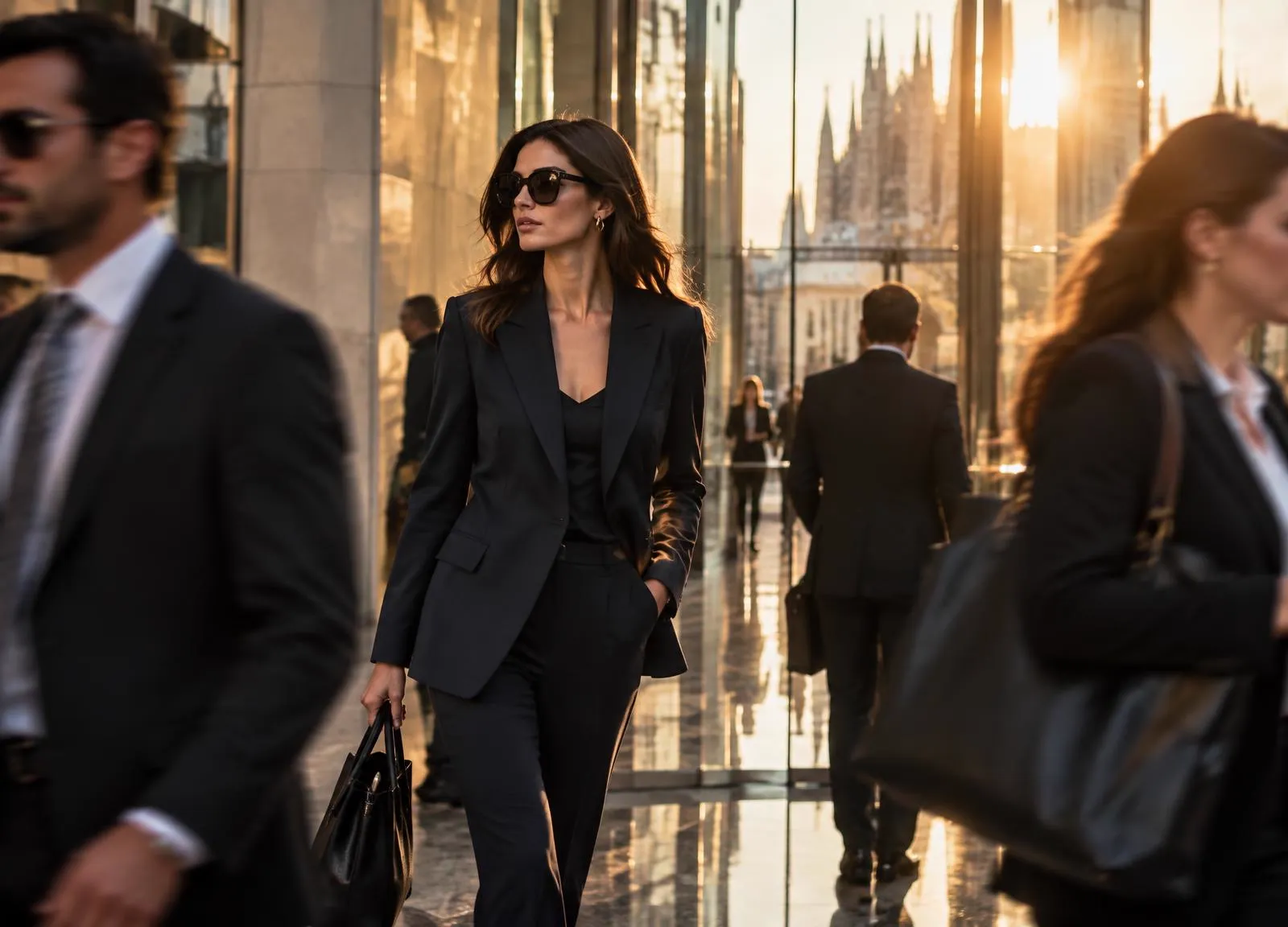
Wear the trousers and blazer from a suit separately. Trousers with a knit and loafers for a quiet day, the blazer with jeans on a casual Friday. It multiplies your outfits without more purchases.
2. The shirt and straight trouser
A tailored shirt tucked into high-waisted straight trousers, with a belt and loafers. It is simple, sharp and timeless, and it travels from meeting to dinner.
3. The knit and midi skirt
A fine-gauge jumper with a pleated or slip midi skirt and ankle boots or block heels. It is soft, professional and comfortable for long days.
4. The shirt dress
One piece, minimal effort. Belt it or wear it loose; add a blazer or cardigan for warmth. In a fabric that does not crease easily, it is among the most practical work dresses.
5. The wide-leg trouser and fitted top
Balanced proportions: a slim top, structured vest or fitted knit with wide-leg trousers. Choose a fabric with a good drape that holds its crease, and check the hem sits just above the floor in your shoes.
6. The cardigan layer
A long cardigan or knit jacket over a blouse and trousers. It suits cold offices and days when a blazer feels heavy. Choose a fine, structured knit so it looks tidy.
Shoes and accessories
Shoes
- Loafers. Comfortable, smart and adaptable. A leather pair with a slight sole is ideal for commuting.
- Block heels. A low or mid block heel gives height and stability.
- Ballet flats and mules. Soft and quick to wear; choose pairs with a secure fit.
- Ankle boots. Good in wet or cold months.
- Clean trainers. Suitable in relaxed offices, in white or a dark neutral.
Comfort matters more than most people admit. Walk around in new shoes at home before wearing them to a full day of work, and keep a pair at the office if your commute is long.
Accessories
- A structured work bag that fits a laptop, notebook and water bottle.
- A simple watch or fine jewellery. Small, quiet pieces read as polished.
- A belt in leather to finish trousers and dresses.
- A scarf for warmth and colour.
For colder commutes, a quality overcoat makes a real difference. Our guide to the best coats for women explains what to look for when buying one.
Dress-code considerations
Hybrid working
When you split days between home and office, aim for pieces that work in both settings. Soft tailoring, knitwear and fluid trousers are comfortable at a desk and still smart for a video call. Keep one very smart outfit ready for last-minute meetings.
Video calls
Cameras show the upper half of your outfit. Solid colours, simple necklines and mid-tones read well; fine stripes and tiny patterns can look busy on screen. Choose fabrics that do not crease easily.
After-work plans
If you are going from desk to drinks, change the accessories rather than the outfit. Swap the work bag for a smaller one, add earrings, and change loafers for heels. For more on this, see our going out outfits guide.
Events and away days
Company events can fall anywhere between a conference and a festival. Check the brief and aim for the middle of what is suggested. If your team heads outdoors for a summer away day or a music event, our festival outfits guide helps you dress practically without losing polish.
Practical variations by season and weather
| Season | Adjustments |
|---|---|
| Winter | Fine merino layers, wool trousers, boots, a proper coat |
| Spring | Trench or mac, lighter knits, loafers |
| Summer | Breathable fabrics like linen blends, sleeveless shell tops, flats or sandals if permitted |
| Autumn | Blazer over a knit, midi skirt with boots, scarf |
In the UK the commute is often as demanding as the office. Wear weatherproof outerwear on the way, and change shoes at your desk if the weather is bad. Keep a spare cardigan on your chair for air-conditioned or underheated rooms.
Adapting for budget and lifestyle
Spend most on the items that work hardest: shoes, a coat, a blazer and a work bag. For other pieces, a good fit matters more than a famous label. A small tailoring alteration, such as shortening hems or adjusting a waist, can make an inexpensive piece look made for you.
A simple weekly rotation
If mornings are rushed, plan the week on Sunday. Pick one anchor trouser or skirt for each day and one top to go with it, then rotate the blazer, cardigan and shoes. Five days can be covered with three bottoms, four tops and two outer layers, and the repetition looks intentional rather than lazy. Hang the outfits together or note them in your phone so the decision is already made.
Work-outfit mistakes to avoid
- Ill-fitting tailoring. Sleeves that are too long, trousers that drag, or a blazer pulling across the shoulders spoil any outfit.
- Uncomfortable shoes. If you cannot walk in them, they will show in your posture and mood.
- Creased fabrics. Choose fibres that hold up, and steam or iron before leaving.
- Too many statement pieces. One focal item per outfit is enough.
- Ignoring the weather. Arriving soaked or shivering affects your day. Dress for the commute too.
- Over-casual basics. Worn-out tees and faded black trousers can read as untidy. Replace them when they lose shape.
Frequently asked questions
What should I wear to work in the UK?
Match your workplace's dress code, and when in doubt, choose business casual: tailored trousers or a midi skirt, a blouse or fine knit, a blazer and comfortable closed shoes. Add a coat that handles British weather.
Can I wear jeans to work?
In many offices, yes, especially on casual days. Choose dark, well-fitting denim without rips, and pair it with a blazer or crisp shirt and smart shoes. Check your employer's guidance if you are unsure.
What shoes are best for work?
Loafers, block heels, ankle boots and smart flats are all reliable. Prioritise comfort and a sole that copes with wet pavements, and keep a second pair at the office if your commute is long.
How many outfits do I need for work?
Fewer than you think. A dozen well-chosen pieces that mix and match can cover a full working week and beyond. Focus on fit, fabric and versatility rather than quantity.
In short
Dressing well for work is mostly about repeatable formulas, good fit and shoes you can wear all day. Build around a few strong basics, adjust for the weather, and keep the finish tidy. For more ideas on dressing for the office, browse the full Office section.