The school run asks a lot of an outfit. You need to be warm at 8.15am, comfortable on the pavement, presentable at the gate and still sensible by the time you reach the office, the supermarket or your desk at home. Good school run outfits are built around that reality rather than against it.
This guide covers what to wear, the formulas that work again and again, and the shoes and accessories that make a difference. It also deals with British weather, the mistakes worth avoiding and how to adapt each look for the day ahead. If you want a wider wardrobe base, our guide to casual outfits is a good companion.
What to wear on the school run
Start with three questions. What is the weather doing? Where are you going afterwards? And how much walking, buggy-pushing or crouching to tie shoelaces does the morning involve? The answers matter more than any trend.
A reliable school run outfit has four qualities:
- Easy movement. You should be able to bend, climb stairs and carry a bag without tugging at a waistband or a neckline.
- Layers you can shed. Playground mornings are cold and classrooms, cars and buses are not.
- Fabrics that forgive. Think jersey, brushed cotton, knitwear with some structure, denim and washable blends. Anything that creases the moment you sit down will look tired by 9am.
- One considered detail. A good coat, a scarf, a pair of clean trainers or a decent bag lifts everything underneath.
Stylish school run outfits are rarely complicated. They are simple pieces chosen with care, in colours that work together, so you can get dressed in a few minutes without thinking.
Key outfit formulas
These are formulas, not rules. Swap in what you own and keep the proportions.
The knit, jeans and coat formula
A fine-gauge or mid-weight jumper, straight or relaxed-leg jeans and a long coat. It is the most dependable combination for autumn and winter, and it suits almost every body shape. Choose a jumper with a little length so it sits over the hips, and tuck in a shirt collar underneath if you want something smarter.
For a more polished version, replace the jeans with dark, softly tailored trousers. The same jumper and coat then take you from the gate straight into a meeting.
The leggings and long layer formula
Leggings are practical for a morning that may end at the gym, a park or a soft play centre. The trick is to balance the closeness of the leggings with a longer, looser top: an oversized shirt, a tunic-length knit or a long cardigan. Add a structured coat or a trench and clean trainers, and it reads as intentional rather than gym-bound. For more ways to wear them, see our leggings outfit ideas.
The sweatshirt and trouser formula
A good sweatshirt can look sharp if the rest is tidy. Pair it with tailored wide-leg trousers or smart straight-leg jeans, then add a wool coat or a smart jacket on top. Choose a plain or subtly marked sweatshirt in a good weight; very thin, bobbled fabric lets the look down.
The dress, tights and boots formula
A knitted or shirt-style dress with opaque tights and flat boots works in colder months and needs no thought. Pick a midi length for coverage when you bend down, and add a belt if you want shape. A longline cardigan or a quilted jacket finishes it.
The skirt and knit formula
Skirts are perfectly practical on the school run if you choose the right length and fabric. A denim midi skirt with a chunky knit and boots is easy and warm; see our denim skirt outfit ideas for variations. A satin or slip skirt can also work in daytime when it is toned down with a sweatshirt or an oversized knit and trainers; our satin skirt outfit ideas show how.
The tailored casual formula
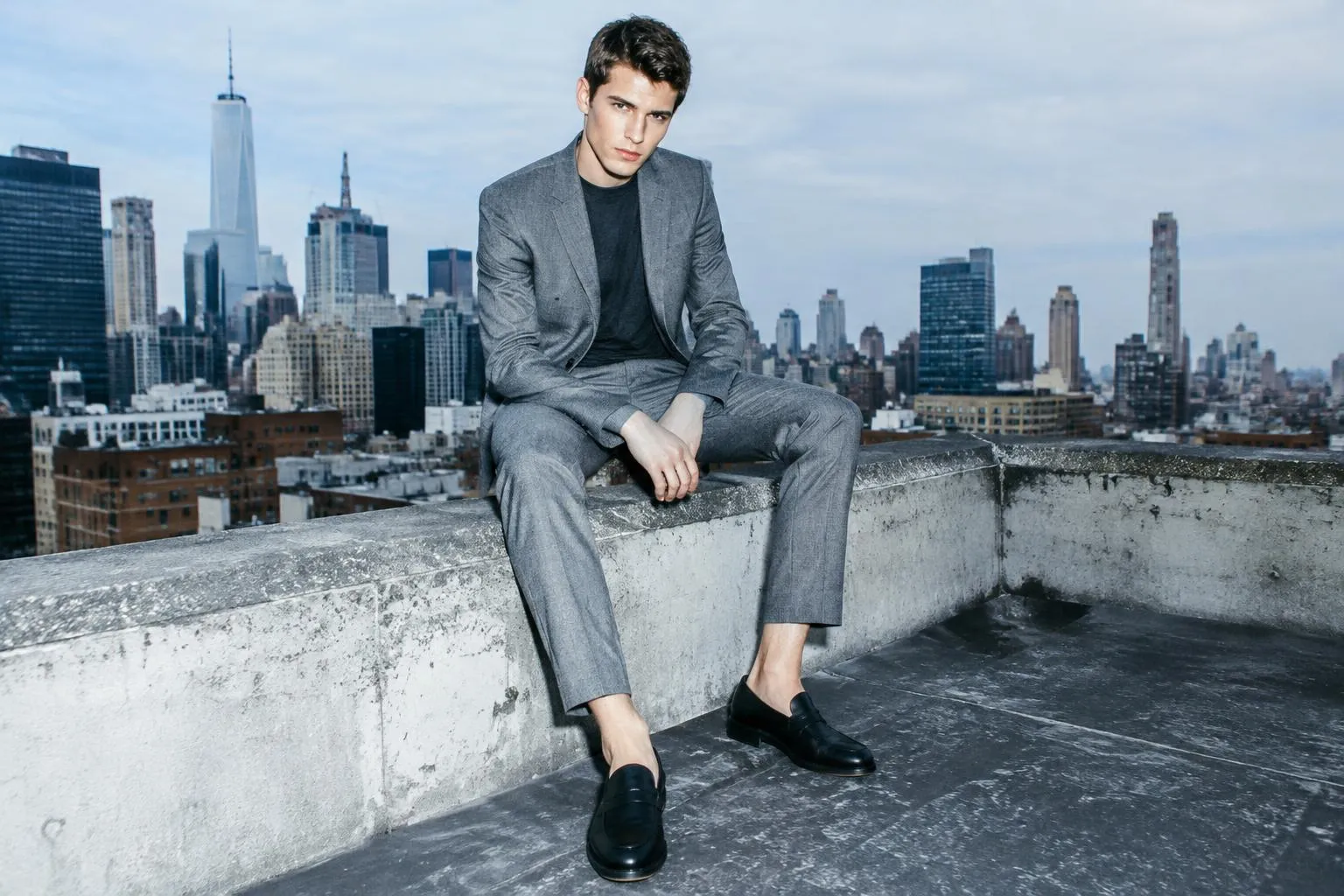
If your day moves from the school gate to work, build a capsule around an unstructured blazer, a crisp shirt, straight trousers and loafers or sleek trainers. It carries you through a morning of lifts and a lunchtime of meetings with no change required.
Shoes and accessories
Shoes decide whether a school run outfit is comfortable or miserable. Your choices should be flat or low, grippy and able to cope with a wet pavement.
- Clean trainers. A plain leather or canvas pair goes with nearly every formula above. Keep them wiped down; scuffed white trainers undo a neat outfit.
- Ankle boots. Look for a low block heel or flat sole and a leather or waterproof finish. They are the best choice for autumn and winter and look smarter than most trainers.
- Chelsea or lace-up boots. Good for muddy fields and wet playgrounds, and they dress up jeans in seconds.
- Loafers and ballet flats. Fine for dry weather, particularly with tailored trousers or a dress. Check the grip before you commit.
- Wellies or waterproof boots. Reserve these for properly wet mornings, and choose a plain colour that suits your coat.
For accessories, think practical first. A cross-body bag or a roomy tote with a zip keeps hands free for coats, book bags and scooters. A lightweight scarf or snood adds warmth and colour, and a beanie or a wide headband copes with wind and bad hair days alike. Sunglasses help on bright, low-sun mornings.
Seasonal and weather considerations
British weather can change several times before 9am, so plan in layers and pick pieces that tolerate a bit of rain.
Autumn and winter
Wool-blend coats, padded jackets and waterproof parkas are the workhorses. A longer coat covers the bum and thighs, which makes a big difference at a windswept gate. Thermal vests under knitwear are discreet and effective. Add gloves that you can use a phone with, and keep a spare pair in your bag.
Spring
Spring means unpredictable showers and chilly starts. A trench, a light mac or a bomber jacket works over cotton shirts, T-shirts and jeans. Keep a small umbrella in your bag and choose shoes that can handle puddles.
Summer
Lightweight trousers, linen shirts, breathable cotton dresses and simple tees are ideal. Add flat sandals or clean trainers, a hat and sunglasses. Because playground mornings can still be cool, a light cardigan or denim jacket is useful.
Dress codes at the gate
Most school gates are relaxed, but some are a little smarter, particularly around assemblies, parent events or if you head straight to work. A tidy jacket, dark jeans and clean shoes work in most cases. Leave very revealing, formal or heavily embellished pieces for other occasions, and check any guidance from your school if you are unsure.
Practical variations
If you are heading to work afterwards
Swap trainers for loafers or ankle boots in your bag, or choose a pair smart enough for both. Carry a scarf you can add or take off to change the look quickly. Keep a spare shirt or top at the office for spills.
If you are heading to the gym
Wear your leggings and a technical top, then add an oversized shirt, a long cardigan and a coat to bridge the gap. Pack a small bag with fresh socks and a water bottle.
If it is pouring with rain
Choose a hooded waterproof jacket, trousers that dry quickly and boots with decent grip. Avoid long hems that will soak up water, and consider wearing your hair up or tucked in.
If you are running late
Keep a go-to uniform: one pair of jeans or trousers, three or four good tops, a jumper and a coat. Put it together the night before if you can, and have your bag and shoes ready by the door.
Styling mistakes to avoid
- Unstable footwear. Stiletto heels and thin soles are no match for wet pavements. Save them for evenings.
- Dressing only for the pavement. If you will be sitting in a car or a classroom, choose layers that you can remove.
- Very pale colours in mud season. Cream trousers and white coats rarely survive wet school runs. Try camel, navy, olive or grey instead.
- Tops that gape or ride up. You will be bending and lifting. Check the fit in a mirror before you go.
- Overdoing the trend pieces. Keep one statement item at a time, and let the rest stay quiet.
- Forgetting your coat. A good coat is the most important piece. If it is warm and well cut, it will carry plain clothing underneath.
Frequently asked questions
What should I wear on the school run?
Choose something comfortable, layered and weather-appropriate that still looks pulled together. A jumper, jeans or trousers, a good coat and clean trainers or boots cover most mornings. Add a scarf or bag you like and you are done.
How can I make school run outfits look stylish without much effort?
Stick to a small colour palette, such as navy, camel, grey and black with one accent. Choose well-fitting basics and add one considered detail, like a good coat or a leather bag. Having a few go-to formulas takes the stress out of the morning.
Are leggings acceptable on the school run?
Yes, in most schools they are perfectly normal. Pair them with a longer top, a structured coat and clean trainers so the look feels intentional. Choose thicker, non-sheer fabric and check that it is opaque when you bend.
What shoes are best for the school run?
Comfortable, flat or low-heeled shoes with good grip are best. Trainers and ankle boots work for most of the year, while waterproof boots suit very wet days. Keep heels and delicate soles for evenings.
To sum up
The best school run outfit is one you do not have to think about: comfortable layers, a good coat and shoes that suit the weather, with one detail that feels like you. Build a few reliable formulas, adapt them to your day and keep exploring our Everyday Style section for more ideas.